
Built the old Kumaoni way
The house, up close
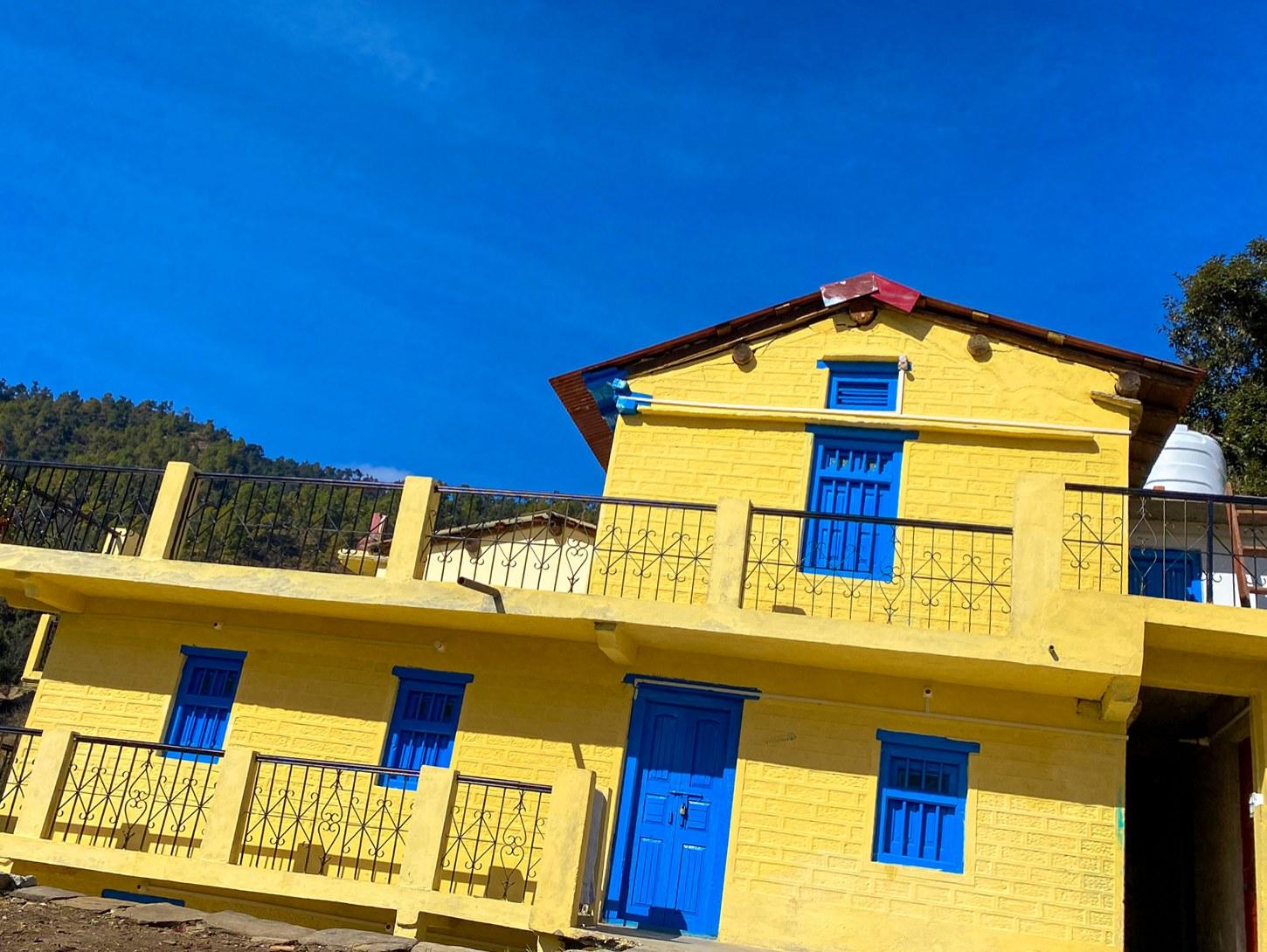
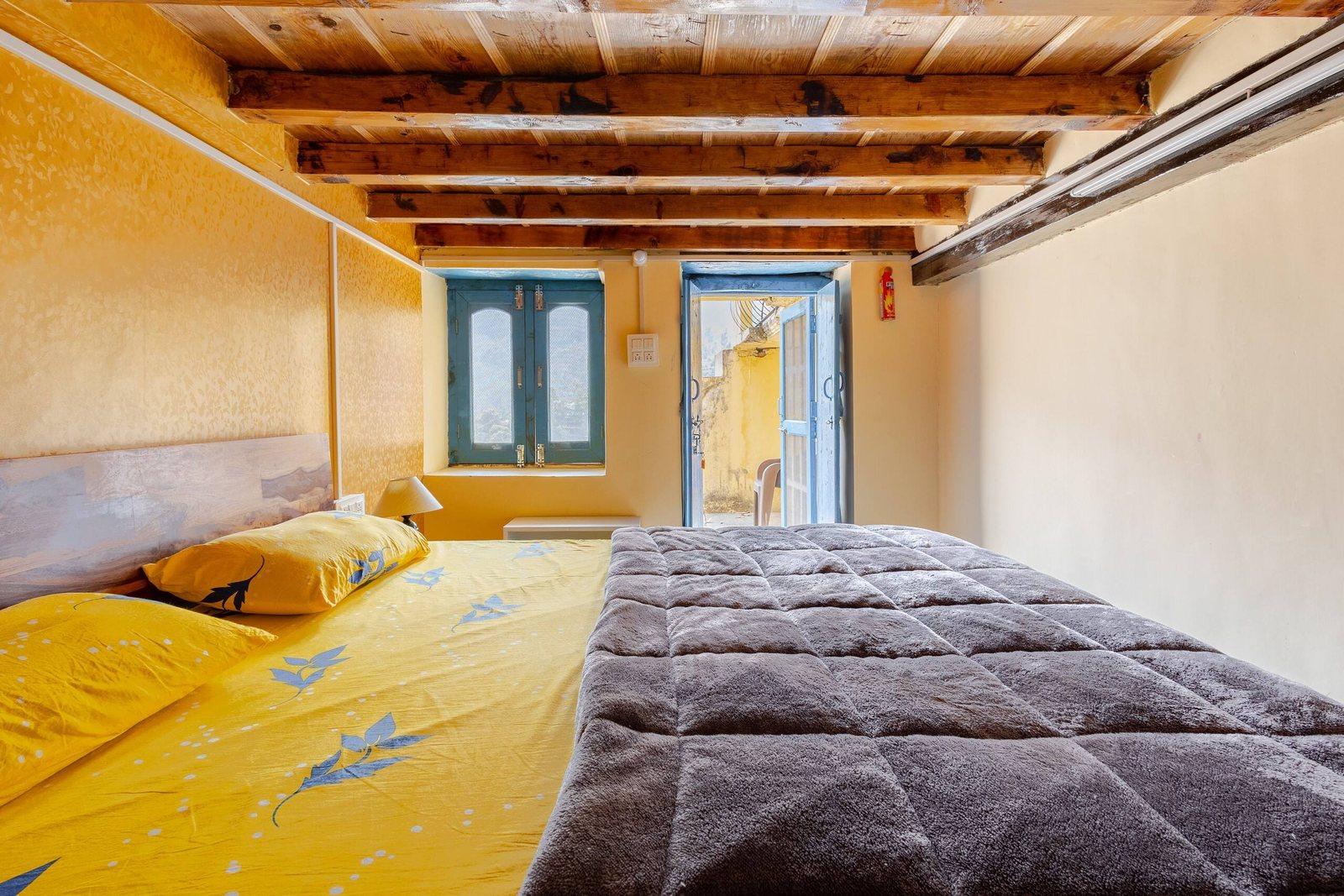
Spend a little time inside and you'll feel the home's age in its bones. The walls are the real thing — built a foot to a foot-and-a-half thick, from mud and stone the old pahadi way — so deep that every window leaves a generous ledge and the rooms feel quietly cocooned. Above you, wooden false ceilings; underfoot, wooden floors; and the doors and windows wear that unmistakable Kumaoni blue.
- Thick mud-and-stone walls — about 1 to 1½ feet deep
- Deep-set windows that gift extra space and light inside
- Wooden false ceilings above wooden floors
- Old-style doors & windows in classic Kumaoni blue
- A golden-shimmer feature wall that lifts the rooms
An honest note — We've kept the old mud-and-stone bones, but finished them for easy modern living — cemented on the outside, then putty and paint within. The one thing we let go: the mud floors, now wood — easier to keep spotless and far kinder to dusty noses like ours.
Why it was built this way
Every old choice had a reason
Nothing here was an accident of taste. A hill house is built against the cold, against the slope, and with whatever the land gives — and every quirk you'll notice was once a quiet act of good sense.
Low ceilings
Kept deliberately low so a single fire — or a few warm bodies — could heat a room through a long Himalayan winter. Less air to warm, more warmth held.
Thick stone walls
Built a foot to a foot-and-a-half deep, from local mud and stone: cool through the summer, warm through the winter, steady through everything the mountain throws. Insulation, before the word existed.
Small rooms
Snug by design, not by accident — smaller spaces hold heat, and a hill family built only as much as it could warm, light and keep. Up here, cosy was survival.
Washrooms kept apart
Indoor plumbing reached these ridges late — bathroom culture in India arrived only a generation or two ago. The washrooms sit a short walk from the rooms, the old pahadi way: spotless and modern now, but honest about how recently all this changed.
Solid-wood false ceilings
Planks of local deodar and pine laid overhead — a second skin that traps warmth, softens the drum of rain on the roof, and carries the smell of the forest indoors.
Block by block
How the house grew
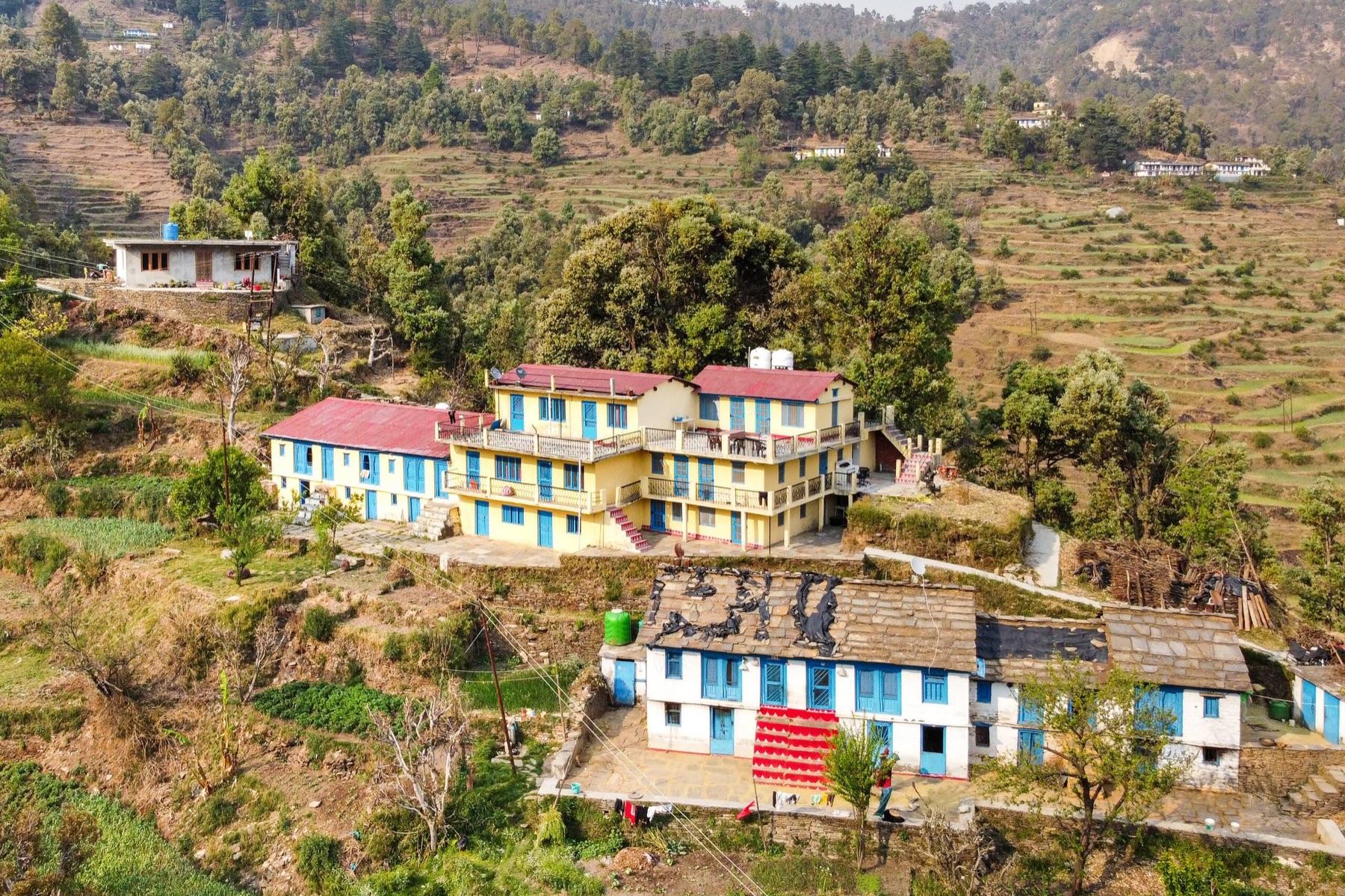
This home didn't arrive all at once. It grew over the decades — each generation adding rooms, roofs and walls to what came before, until it became the house you'll stay in today.
- Before 1992
The first rooms
In our grandparents' time, the home was just two or three small rooms, facing east. None of the blocks you see today existed yet.
- After 1992
The right block
Our father renovated the home and built the right block — the first concrete roof in the entire village.
- Around 2000
The back block
Father added the block at the back, which holds the largest room and the kitchens.
- Around 2005
The original, restored
Our uncle renovated the original part our grandparents had built.
- 2021
The right block, refreshed
Manohar renovated the right block, bringing it up to date for guests.
- 2026Planned
The oldest block, next
Manohar will renovate the oldest block — restoring where it all began.
More than a home
A stay that stays in the village
Kunja isn't a resort carved out of the hills — it's a real Kumaoni village, and the home sits right in the middle of it. When you stay, you're not insulated from that life; you're part of it.
And what you spend here, stays here. The food comes from these fields and these hands; the help comes from family; and a few good days of yours help a small hill village keep living, working and proud — instead of emptying out to the cities, like so many others have.
- Local hands. Cooking, guiding, caretaking — the people who look after you are from Kunja and the villages around it.
- From these fields. Much of what reaches your plate is grown right here, or bought from the village.
- Keeping the village rooted. Your stay helps a hill family stay put — a small stand against the villages emptying into the cities.