
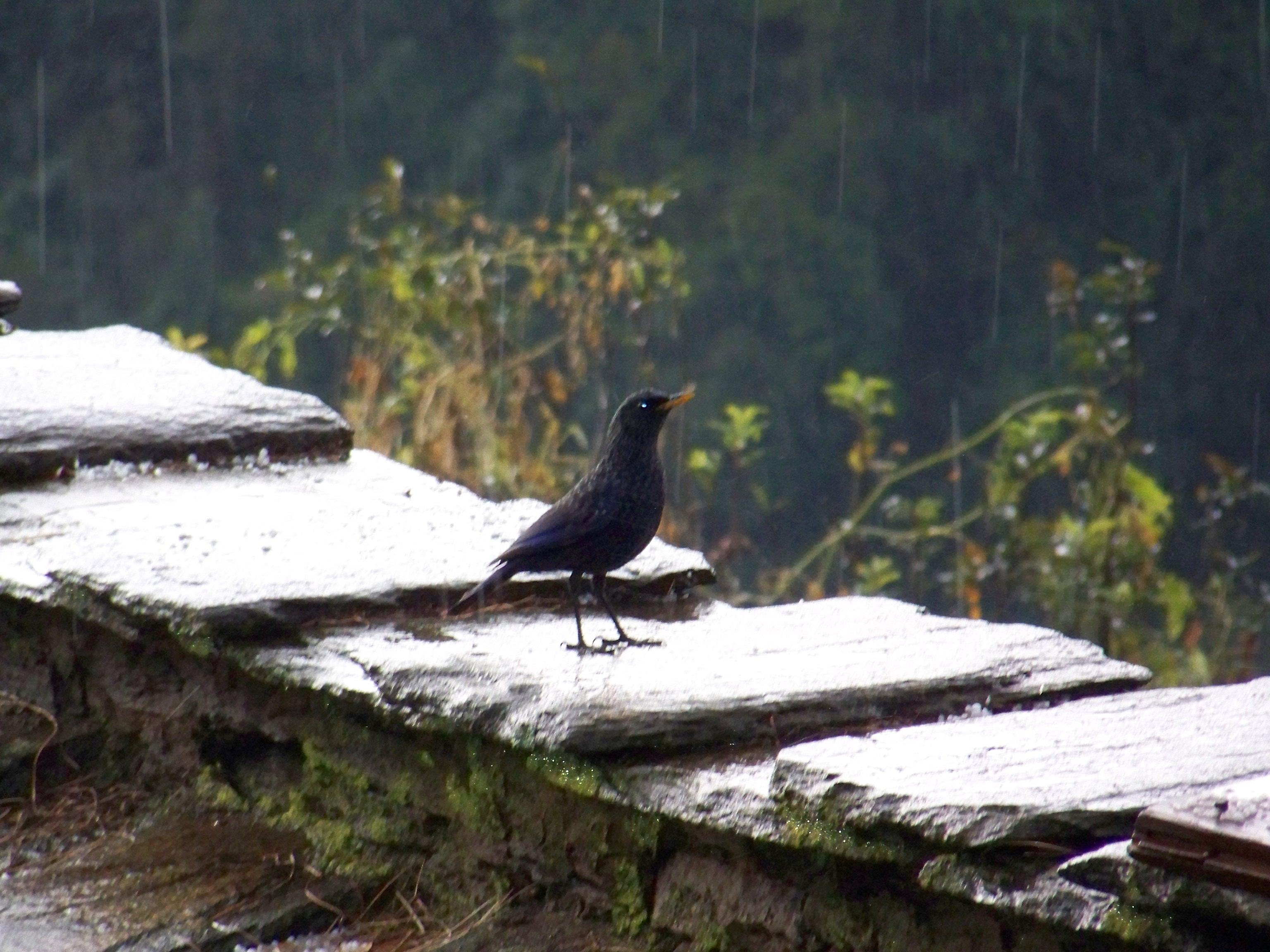
Blue Whistling Thrush
Myophonus caeruleus
A big, dark, violet-blue bird of the streamsides — all black at a distance until the light catches its spangles, and famous for the rambling, almost human whistle it pours out at dawn and dusk.
Seen atKunja
Opens recordings on xeno-canto, the open bird-sound archive.
Field notes
- Order
- Passeriformes
- Family
- Muscicapidae · Chats & Old World flycatchers
- Genus
- Myophonus
- Length
- 31–35 cm
- Weight
- 136–230 g
- At Kunja
- Resident — along streams and shaded gullies
- Conservation
- Least Concern
How to know it
A large thrush that looks plain blue-black until close light reveals the cobalt spangling across its head, breast and wing-coverts. The bill is bright yellow and the eye dark; it bounds along the ground in long hops, cocking and fanning its tail as it goes.
What it eats
A forager of the wet edges — insects, snails, worms, small crabs and other streamside life picked from mossy rocks and leaf litter, with berries and fruit taken in season.
Where & when to spot it
Near running water: shaded streams, damp gullies, mossy rocks and the stone water-channels around Kunja. Easiest to find at first light and at dusk, when its loud, rich, wandering whistle carries through the half-dark long before the bird itself is seen.
Nesting & mating
Builds a bulky cup of moss and roots on a rock ledge or a beam beside running water — often under a bridge or in a culvert — and usually raises two broods of three to four eggs through the warmer months.
In the field
When we’ve seen it
Most often photographed in November. That makes autumn a clear window to spot it around the homestay.
Spotting tip: head out early in the day, walk slowly and stop often, and listen as much as you look — most of these birds call before they show themselves.
In the lens
Blue Whistling Thrush, photographed at Kunja
Photographs by Manohar Negi · mnegi.com — tap any photo to view it full
More to spot
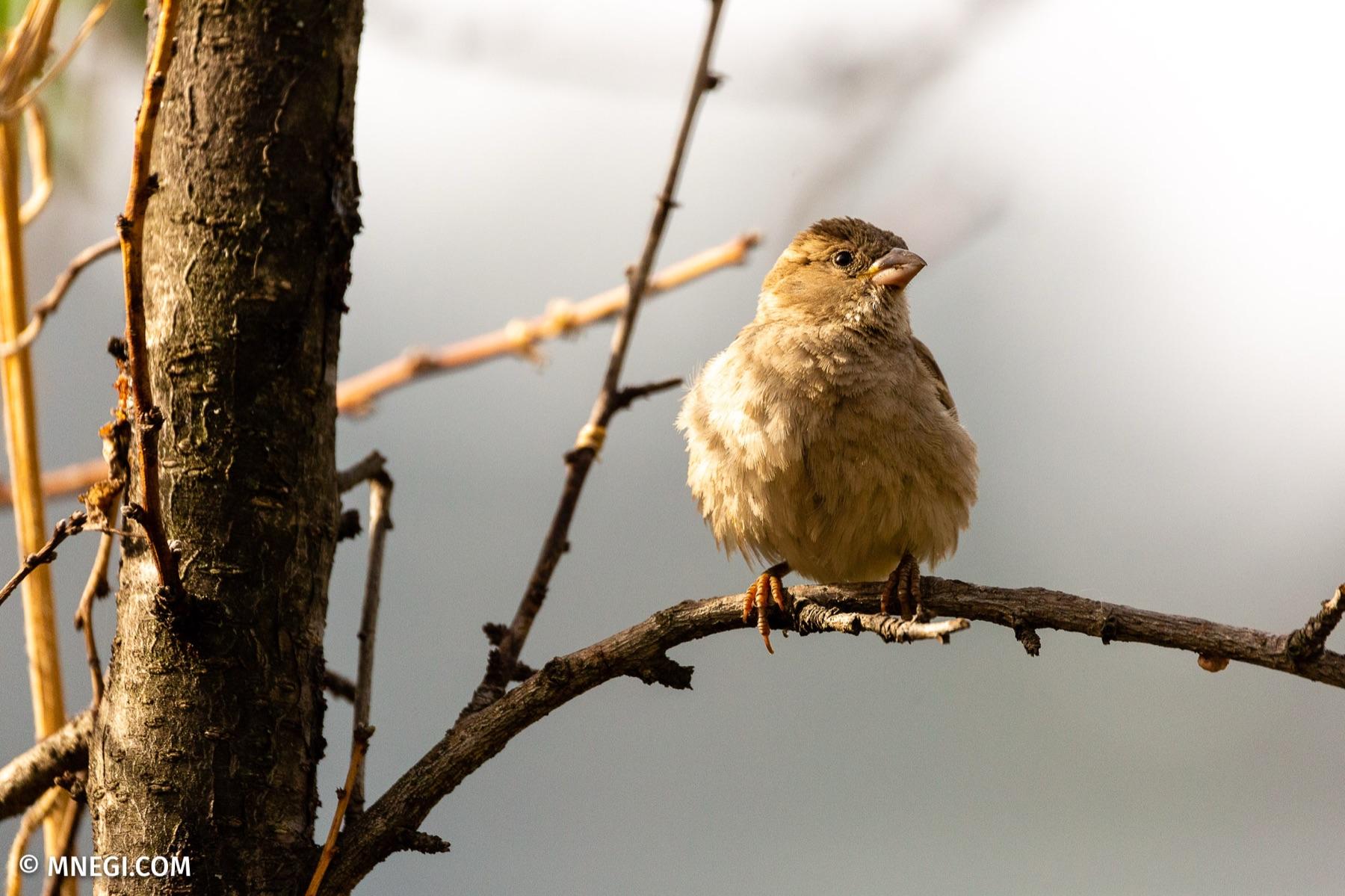 Passeridae
House Sparrow
Passer domesticus
Kunja
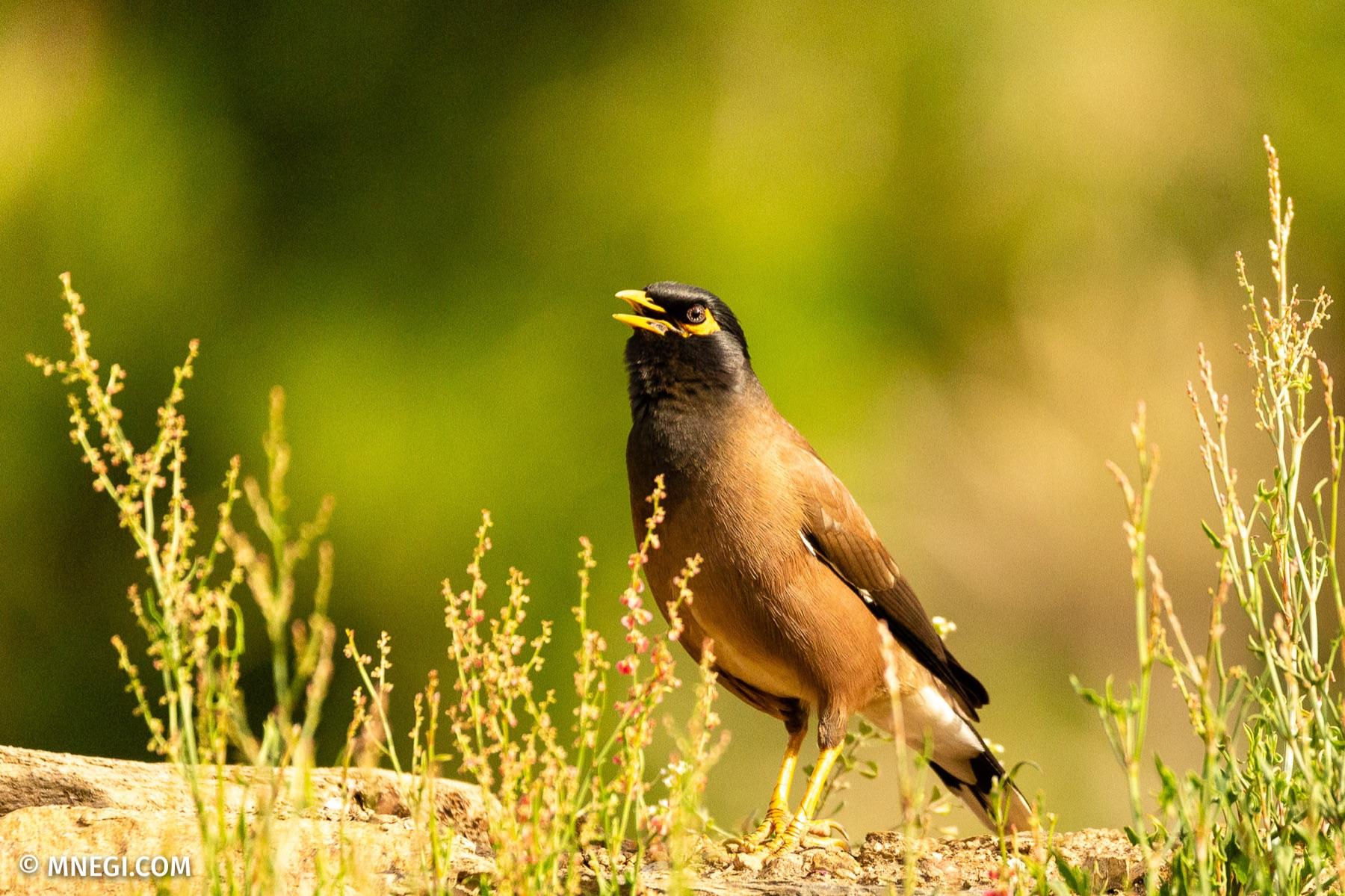 Sturnidae
Common Myna
Acridotheres tristis
Kunja
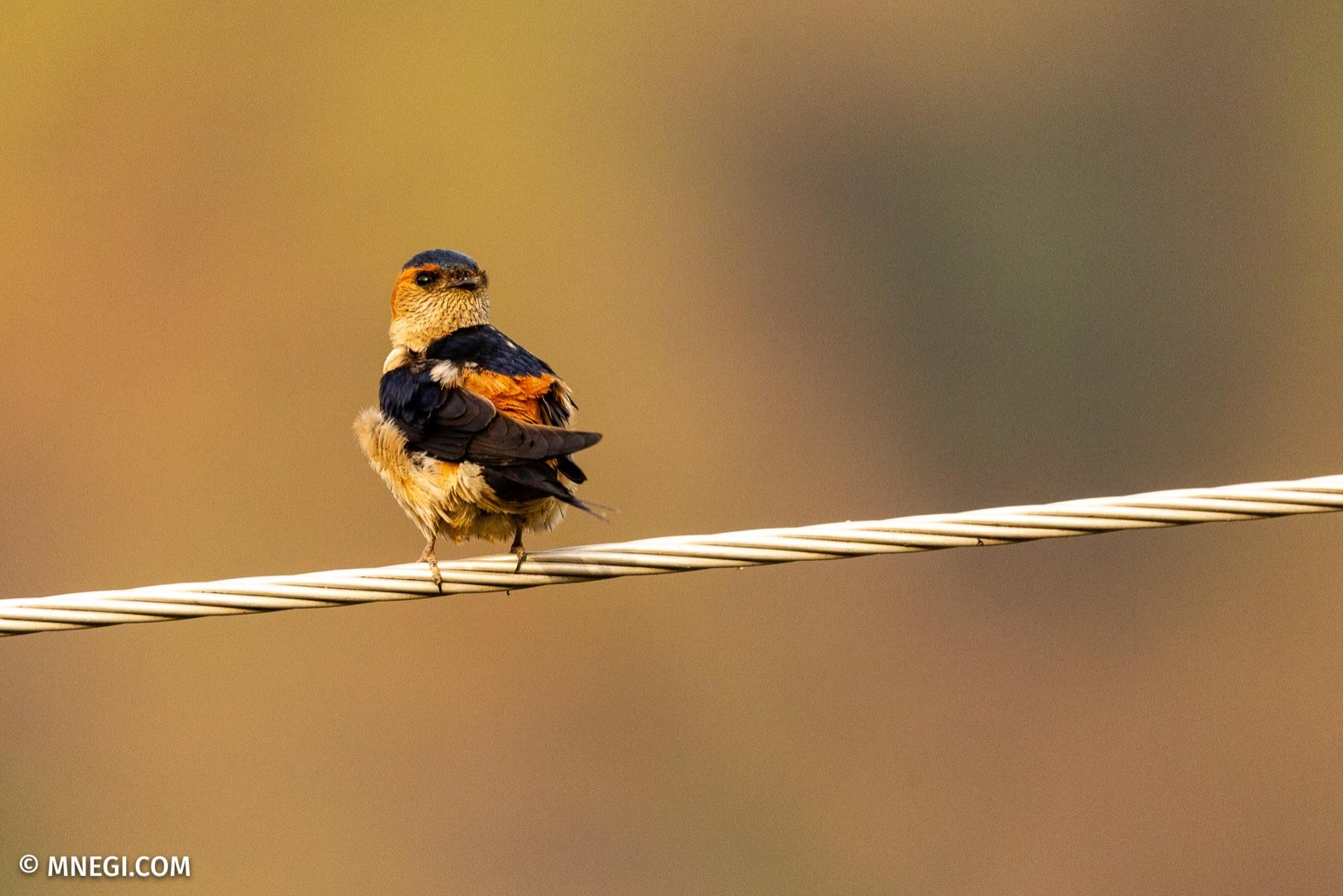 Hirundinidae
Red-rumped Swallow
Cecropis daurica
Kunja
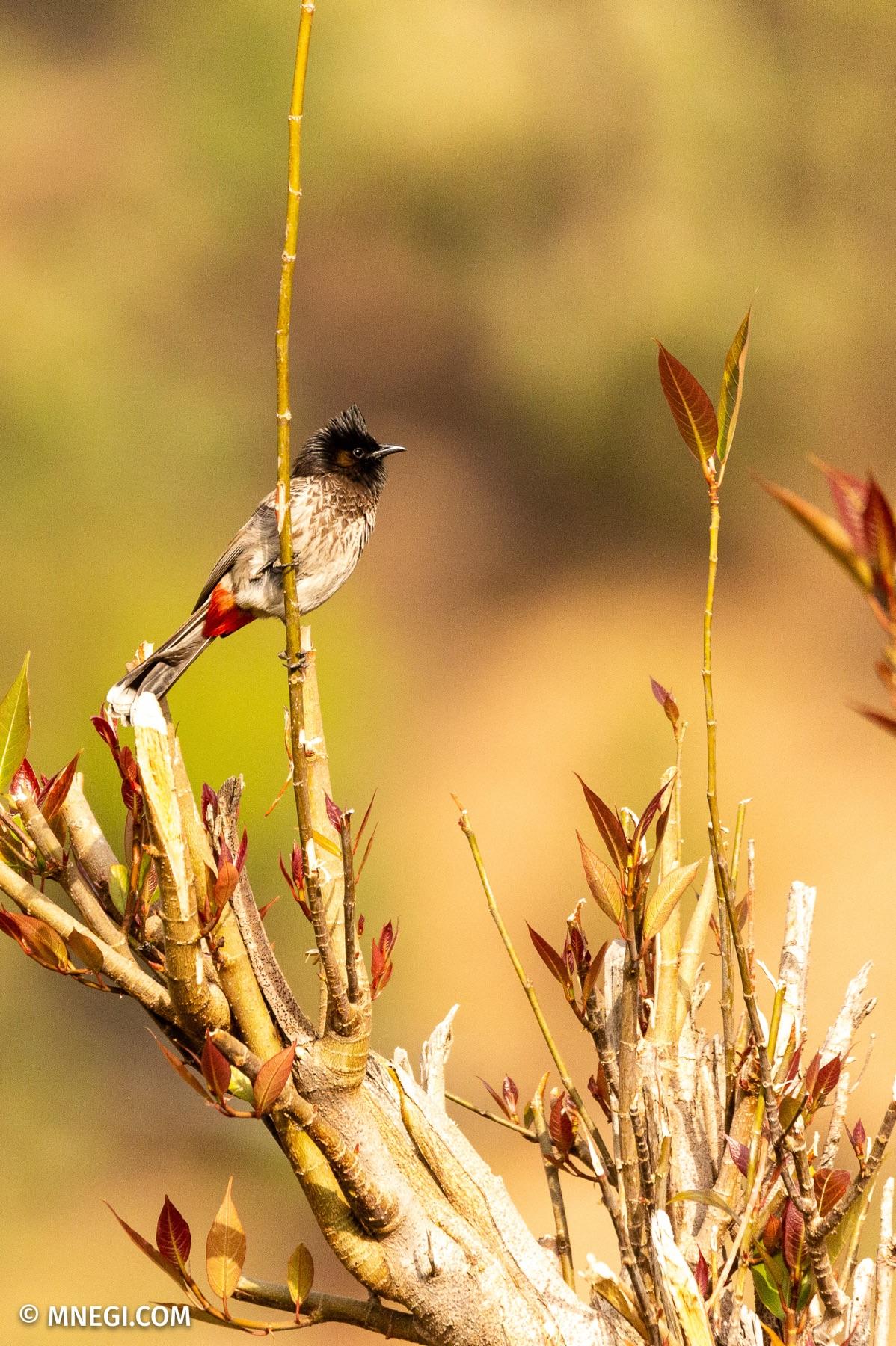 Pycnonotidae
Himalayan Bulbul
Pycnonotus leucogenys
Kunja
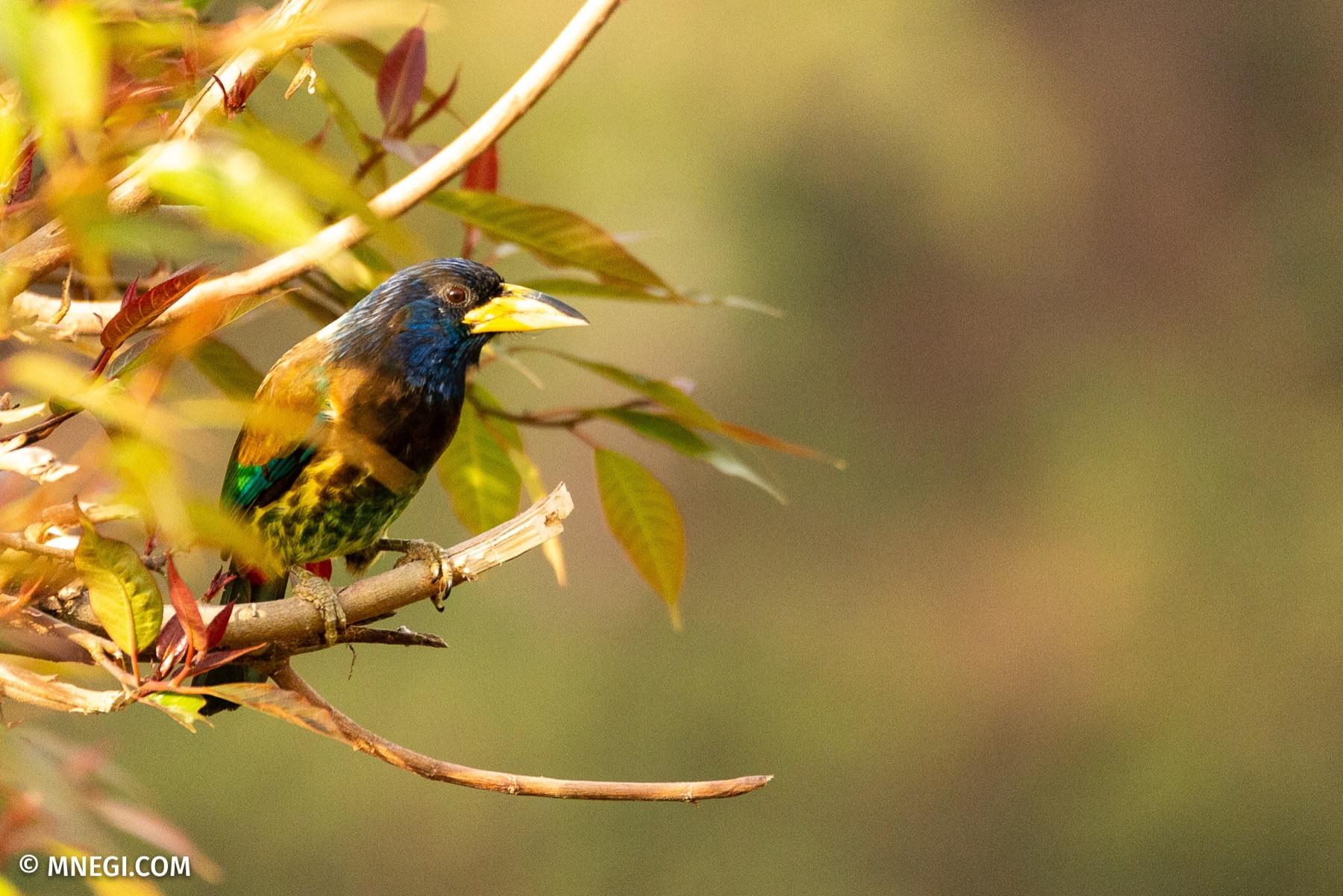 Megalaimidae
Great Barbet
Psilopogon virens
Kunja
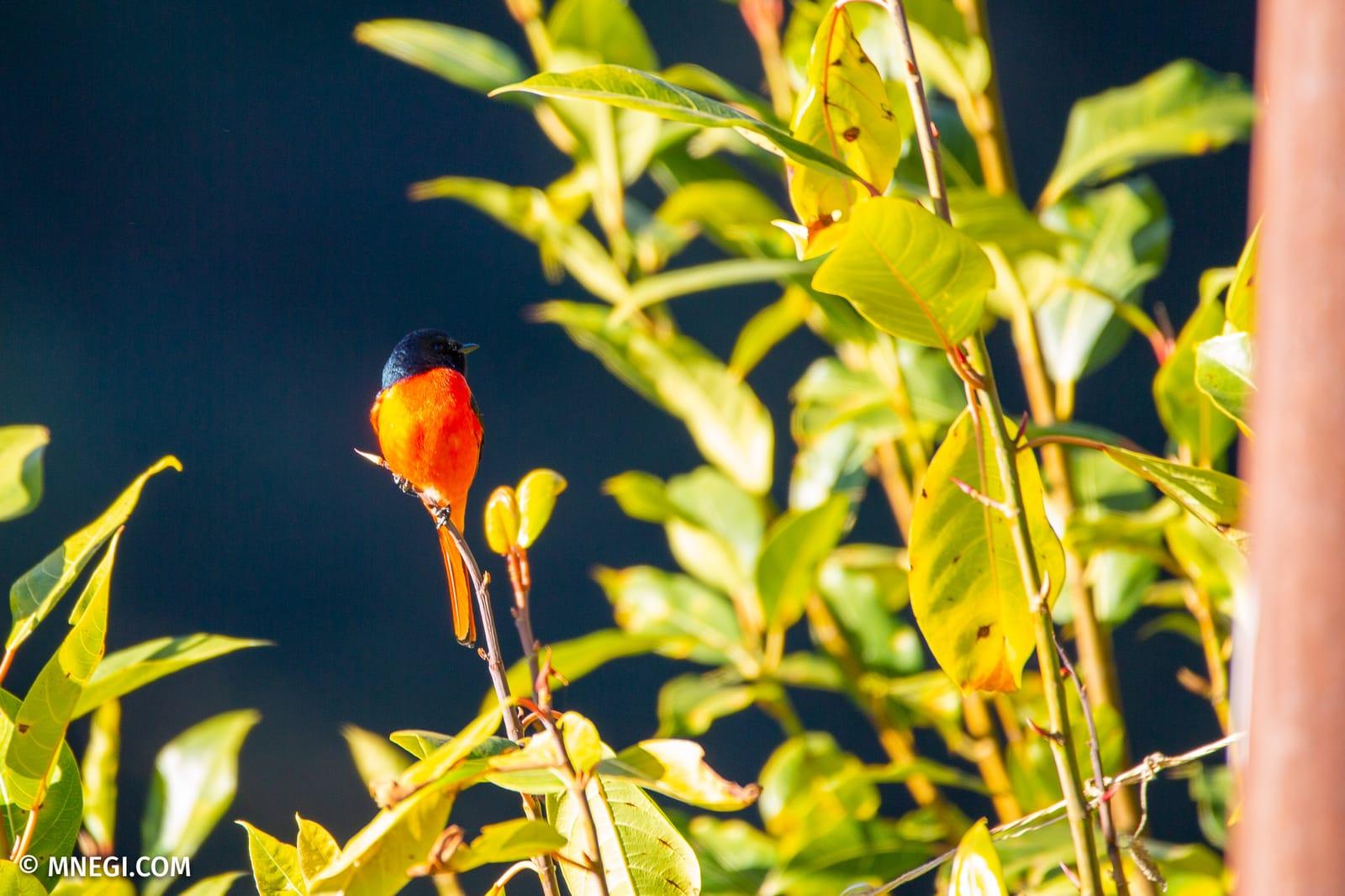 Campephagidae
Scarlet Minivet
Pericrocotus speciosus
Kunja