
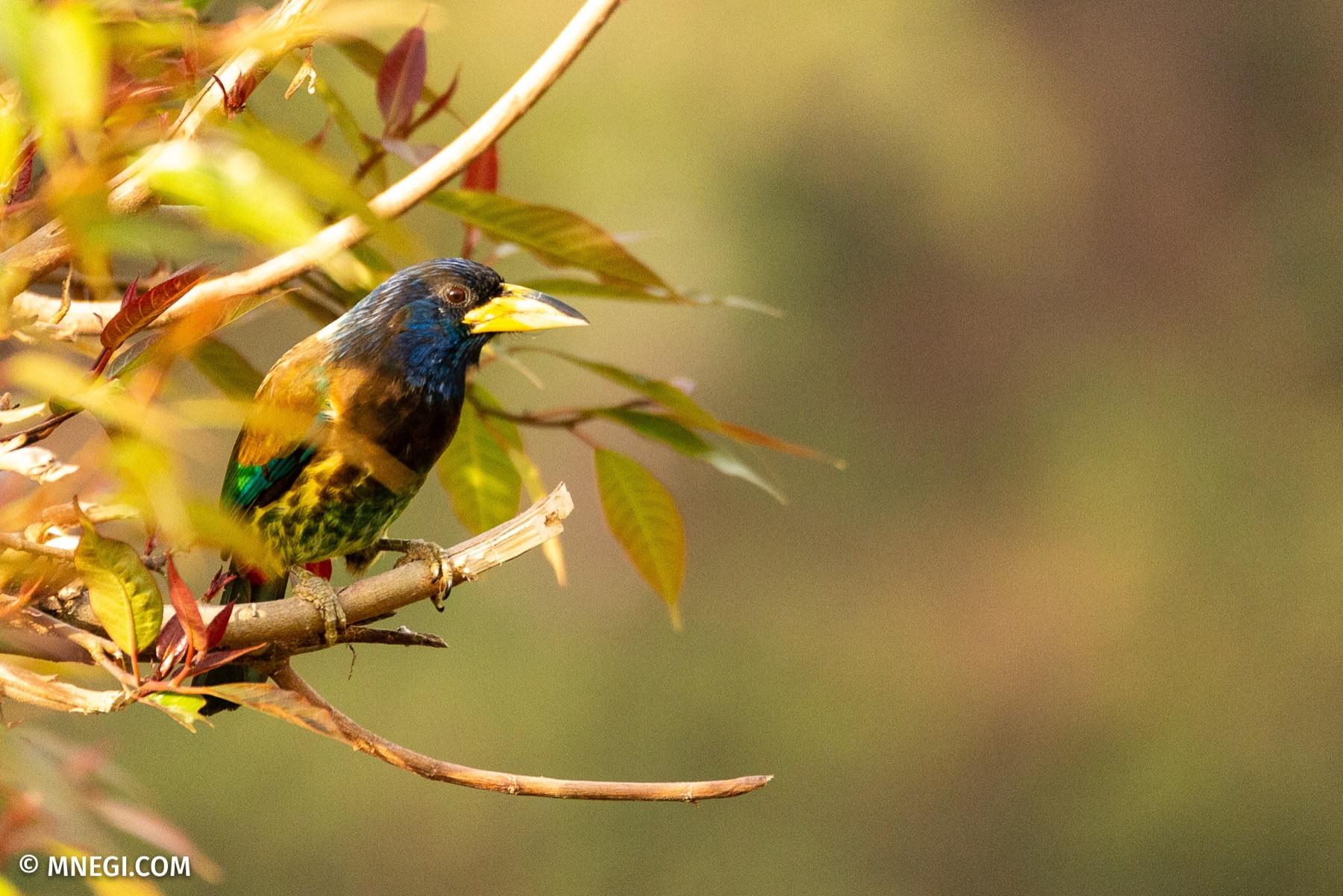
Great Barbet
Psilopogon virens
Its loud, ringing call echoes through the cedars.
Opens recordings on xeno-canto, the open bird-sound archive.
What the hills call it
Basanta
/ ba·san·taa /बसंता
Great Barbet — Its loud, ringing call echoes through the cedars.
Field notes
- Order
- Piciformes
- Family
- Megalaimidae · Asian barbets
- Genus
- Psilopogon
- Length
- 32–35 cm
- Weight
- 150–295 g
- At Kunja
- Resident — here all year round
- Conservation
- Least Concern
How to know it
A big, heavy barbet — oily green body, a dark blue-green head, a brown-streaked breast and a thick pale-yellow bill. Far more often heard than seen.
What it eats
Mostly fruit — figs, berries and wild cherries — with some insects; a key disperser of fig seeds through the forest.
Where & when to spot it
High in the leafy oaks and fruiting trees on the slope above the village. Listen for its loud, far-carrying, monotonous 'pi-o, pi-o' through the warm months.
Nesting & mating
Chisels a nest-hole in a soft or dead trunk, both birds digging; two to four eggs are raised inside through spring and summer.
In the field
When we’ve seen it
Most often photographed in March, usually in the middle of the day. That makes spring a clear window to spot it around the homestay.
Spotting tip: head out in the middle of the day, walk slowly and stop often, and listen as much as you look — most of these birds call before they show themselves.
In the lens
Great Barbet, photographed at Kunja
Photographs by Manohar Negi · mnegi.com — tap any photo to view it full
More to spot
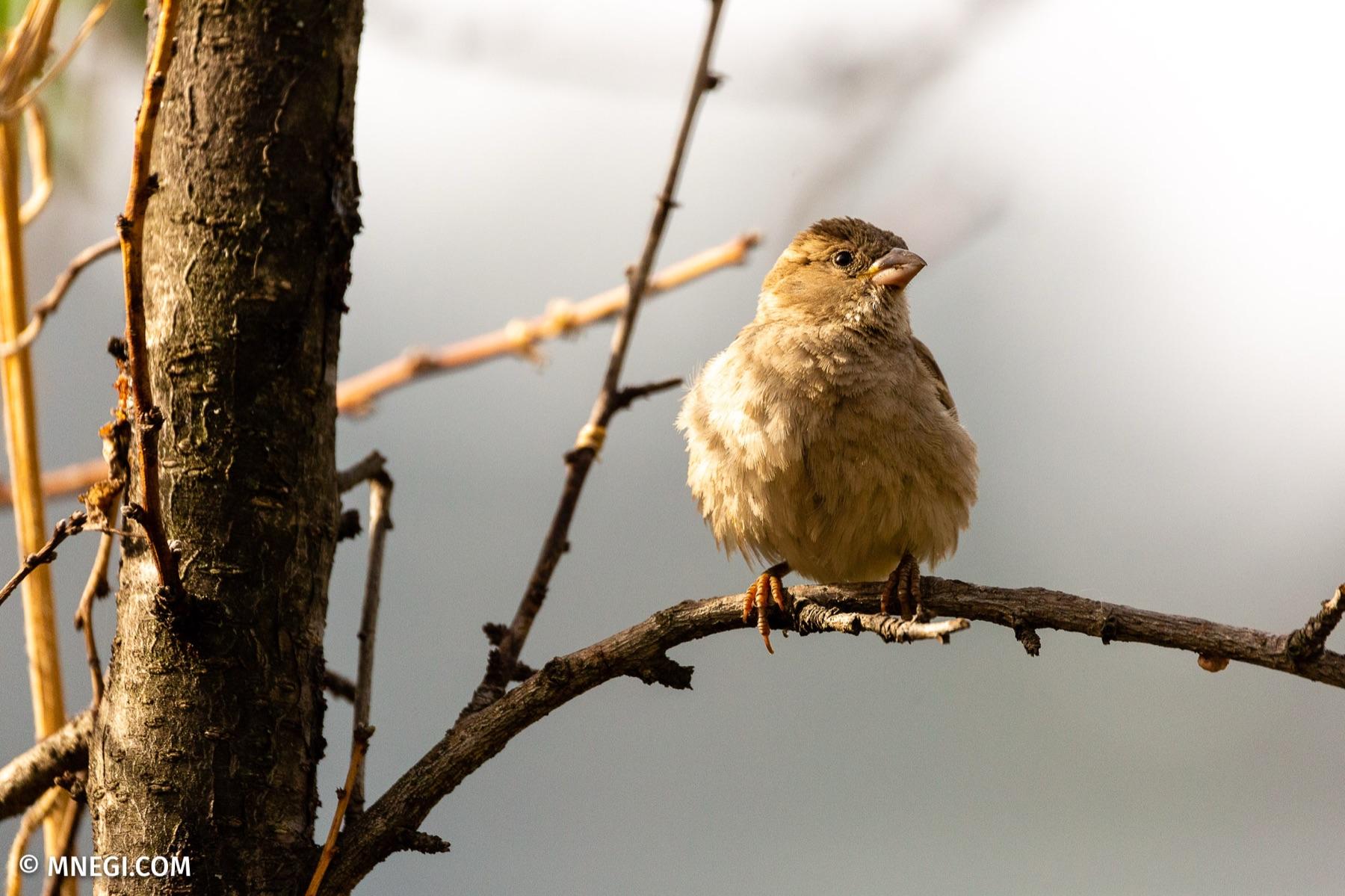 Passeridae
House Sparrow
Passer domesticus
Kunja
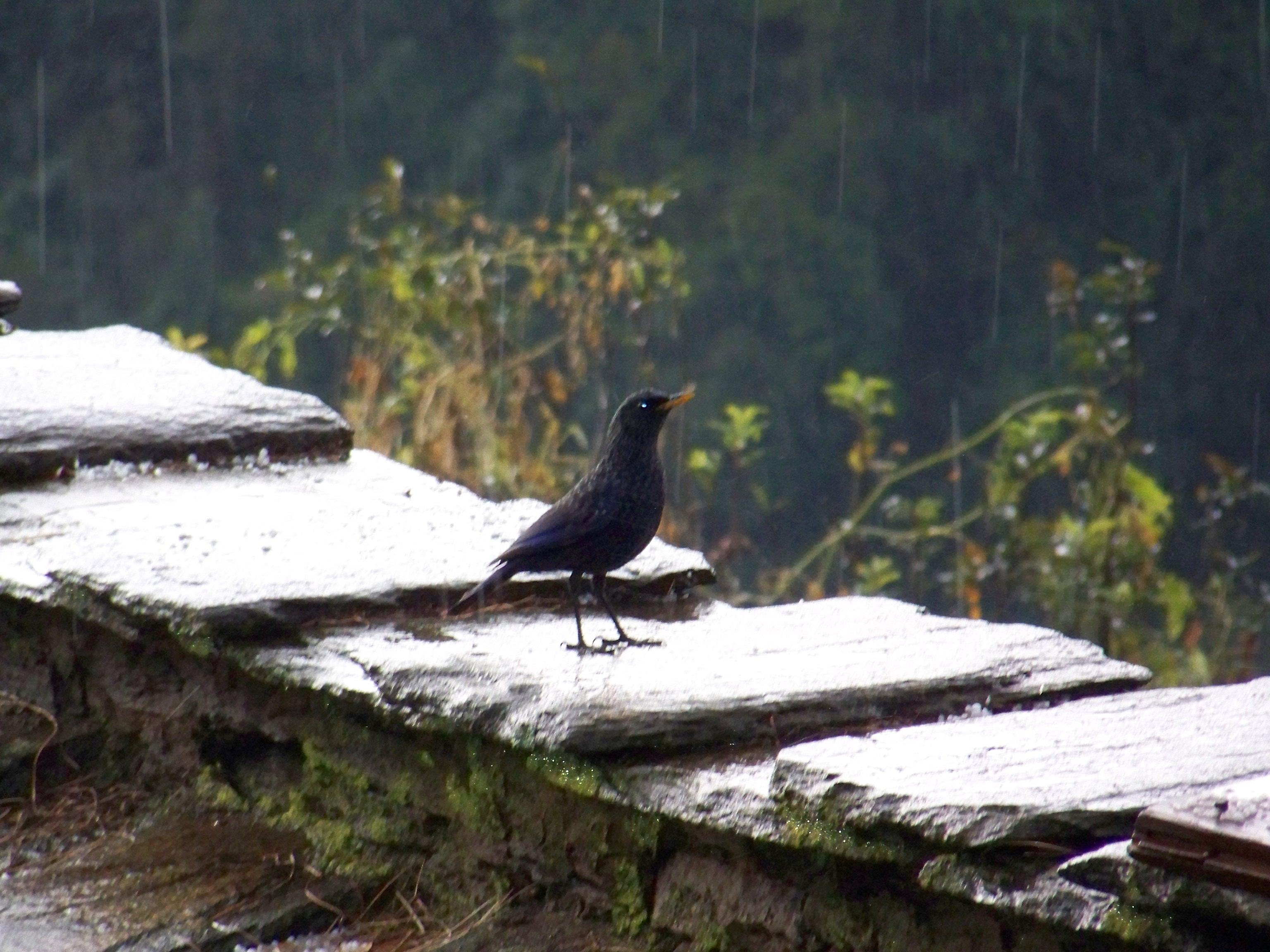 Muscicapidae
Blue Whistling Thrush
Myophonus caeruleus
Kunja
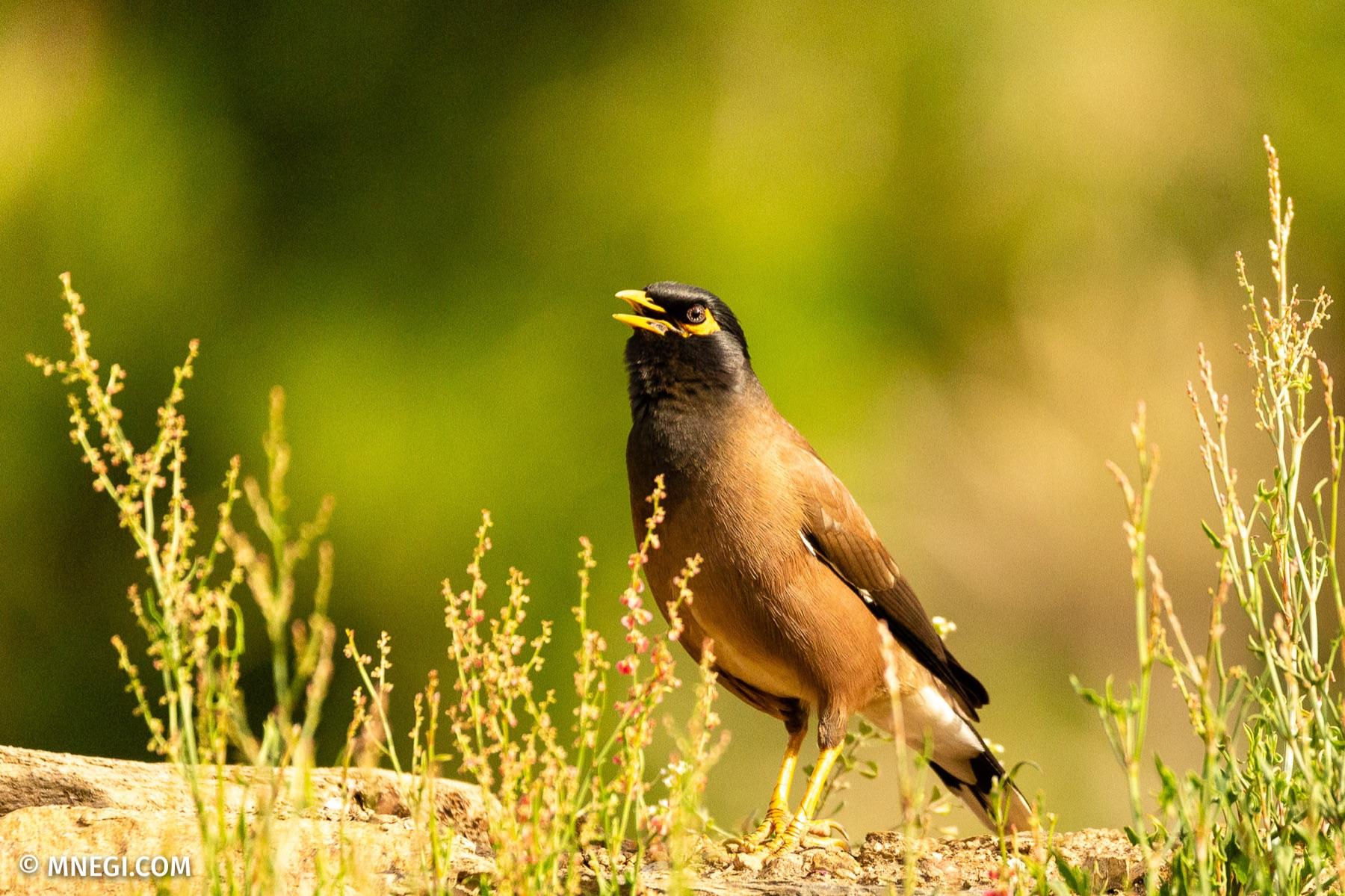 Sturnidae
Common Myna
Acridotheres tristis
Kunja
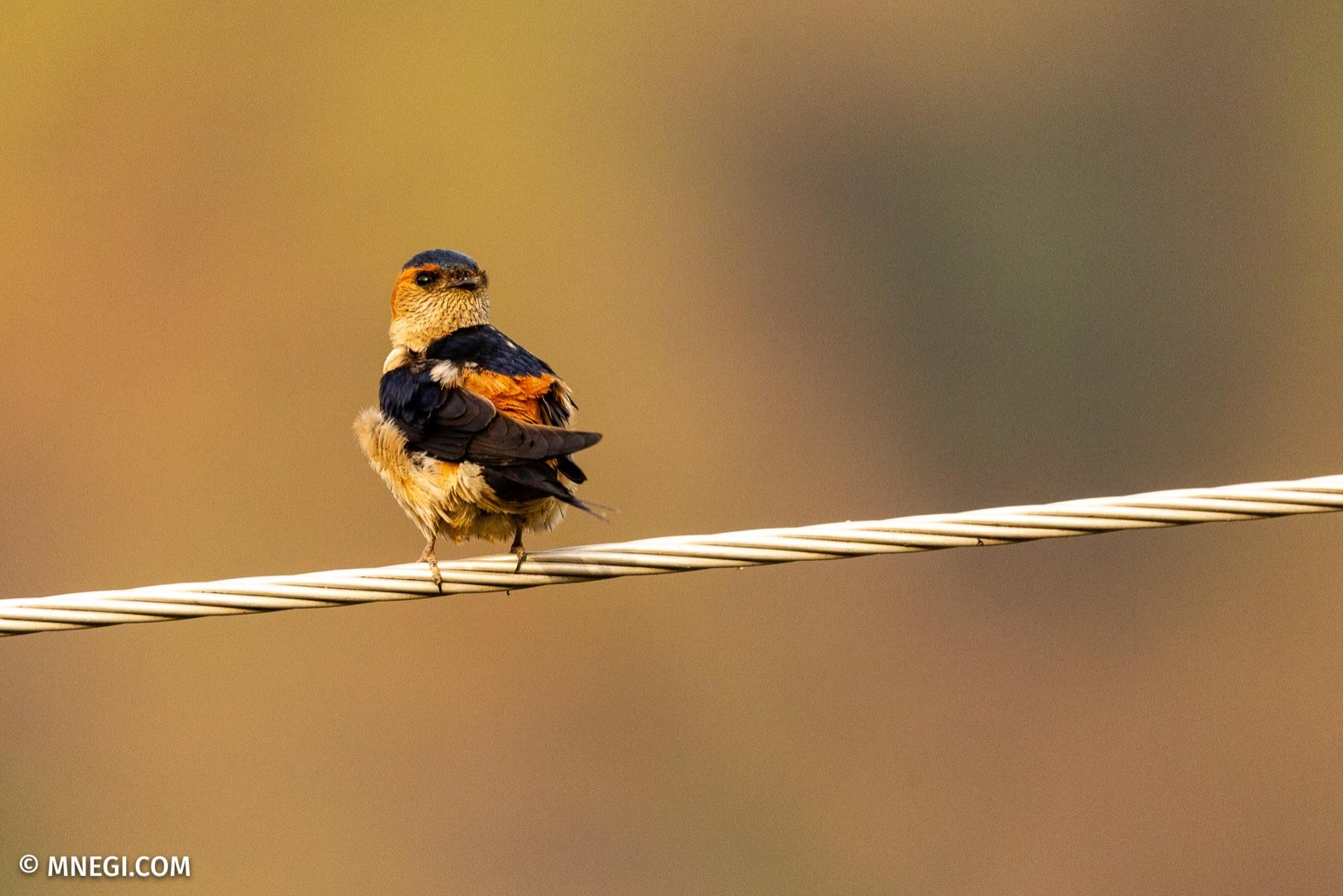 Hirundinidae
Red-rumped Swallow
Cecropis daurica
Kunja
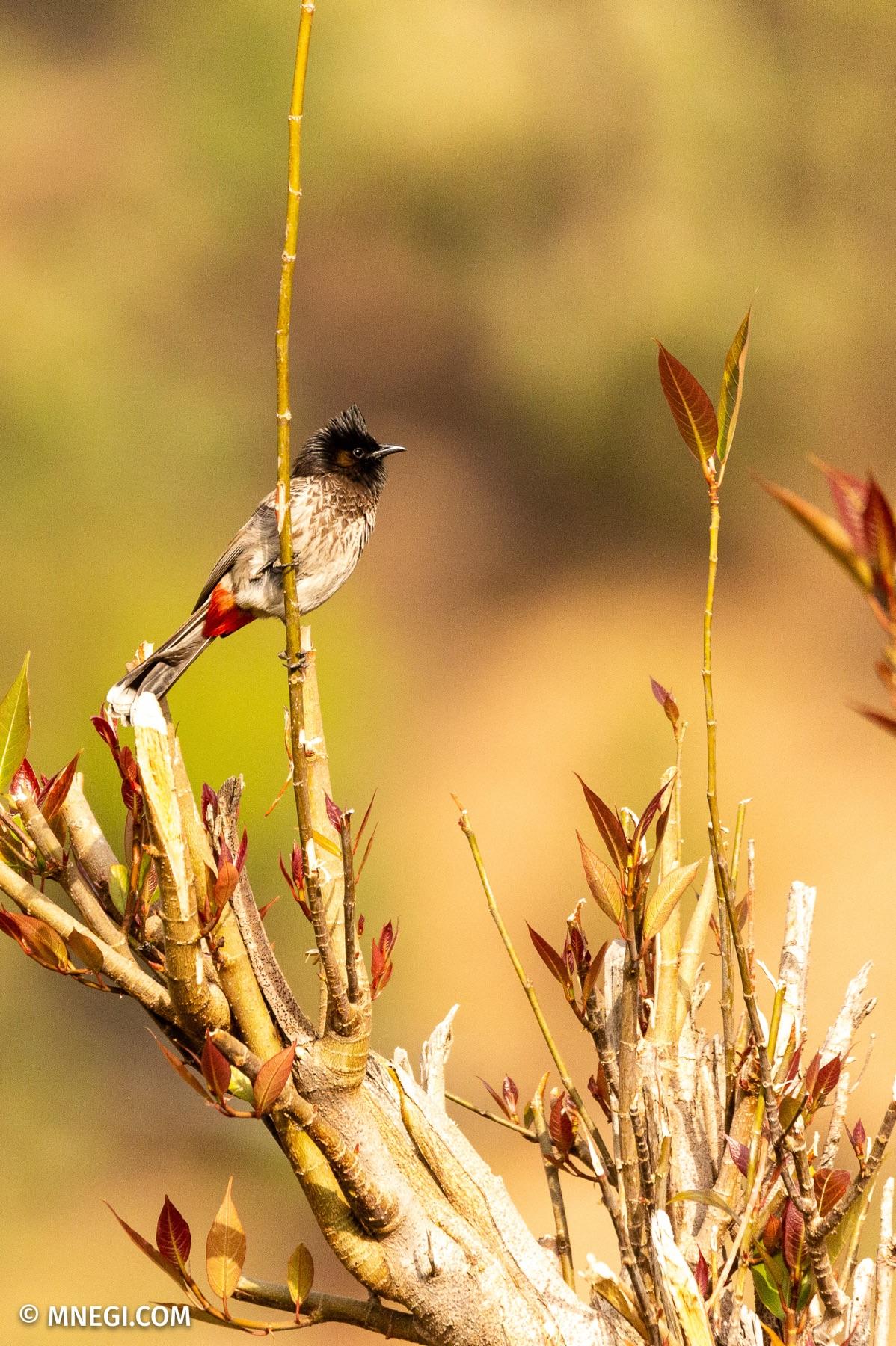 Pycnonotidae
Himalayan Bulbul
Pycnonotus leucogenys
Kunja
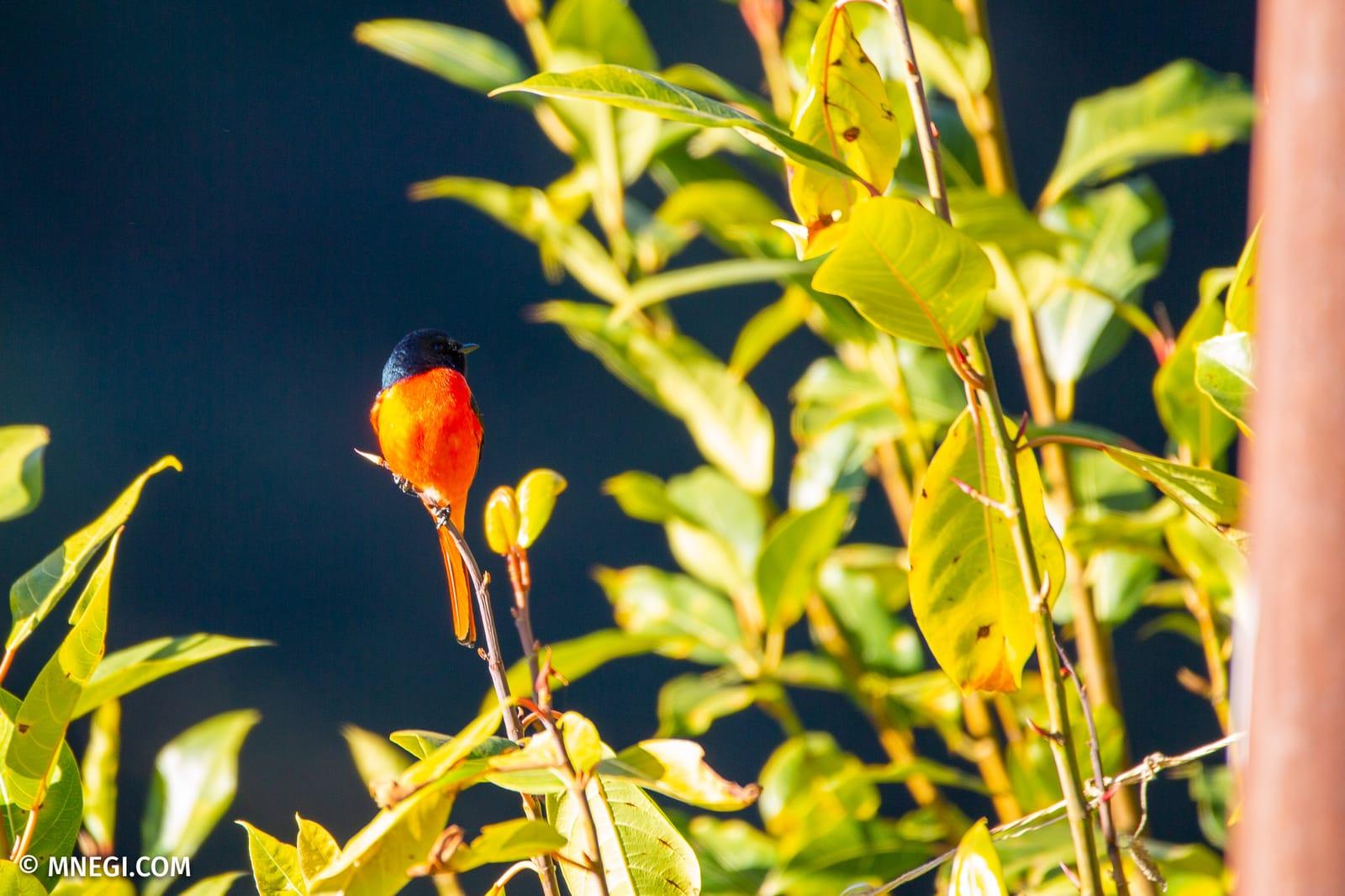 Campephagidae
Scarlet Minivet
Pericrocotus speciosus
Kunja