
2009
The day I first came to Kunja
We were married on the 25th of November, 2009. I had never once seen the house I was about to call home — and the journey to it is still one of the longest of my life.
Back to the journal
Contents
We were married on the 25th of November, 2009. I had never once seen the house I was about to call home — and the journey to it remains, to this day, one of the longest of my life.
It is strange how a day that enormous comes back to you mostly in fragments. Whole stretches of that wedding and that journey have simply gone; what stays is a handful of vivid things — a stop for tea by the roadside, the sickness on the climb, the swing of the doli in the dark, the bright cold of the first morning. I will tell it as honestly as I can, gaps and all, because the gaps are part of the truth of it: I arrived too tired, and too overwhelmed, to hold on to much.
Not quite strangers
One thing, at least, was not unknown to me. We had been engaged almost a year earlier, and in that year I had met a good many of the family — so when the wedding finally came, I was not marrying into a houseful of strangers. I knew the faces. What I did not know was the place itself: the land, the village, the hundred-year-old house at the end of that long road. Of all the things a bride frets over, it was the geography, oddly, that was the great unknown.
That is how these things were, and largely still are: you commit to a person and a family first, and to a place and a life sight unseen. For a year I had been engaged to a man whose home I had never visited, in a village I could not have found on a map, and I had said yes to all of it on trust. Looking back, the not-knowing seems extraordinary. At the time, it was simply how a marriage was made.
The plains and the hills
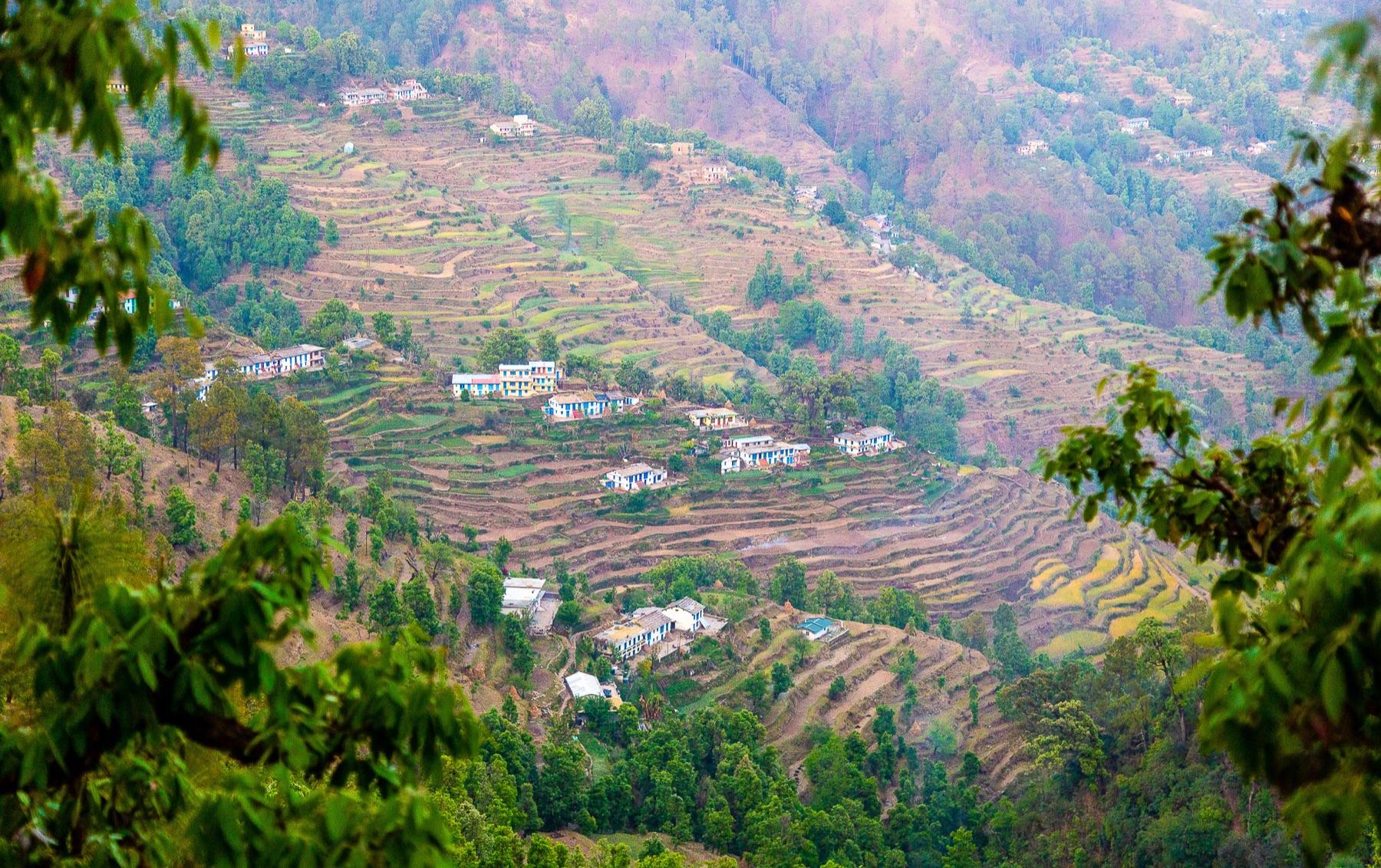
I was a plains girl by upbringing, used to flat roads and easy distances, and the hills had only ever meant the hard slog of my college years. Now they were to be home. Some part of me braced for the difference — the cold, the steepness, the remoteness of a house at the end of a private road and a doli ride. What I could not brace for, because no one can until they live it, was how completely a place like this gets into you: how the very hills that made me sick on the way up would, in time, become the view I could not imagine waking without.
I had tried, in the months before, to picture where I was going — and I had pictured it wrong, of course; you always do. From the plains, a 'village in the hills' is a vague and romantic idea, and the reality of a particular house, on a particular slope, at the end of a particular impossible road, is something no amount of imagining prepares you for. Whatever I had expected, it was not a doli ride through the dark to a hundred-year-old house I would meet for the first time at eleven o'clock at night.
The wedding at Anurag Palace
The baraat set out from this house — from Kunja, the home I would soon belong to — early on the morning of the wedding, and made the long journey down, reaching Haridwar only by the late evening. There was a halt before they could come on to the venue, as there always is, and then the celebrations began in earnest at Anurag Palace, where the wedding was held.
The night ran full, one function flowing into the next: the reception first, and then everything that leads up to the marriage itself, until the lagn — the marriage rite, the actual binding of it — came at midnight. By the time the last of the ceremonies was done I had barely closed my eyes; a wedding leaves a bride very little of the night to herself. And the real journey, the one that would carry me away to a place I had never seen, had not even begun.
The bidaai
Then, early the next morning, the bidaai — the farewell. Every bride knows that particular ache, the leaving of the home you grew up in for one you have yet to learn. I will not pretend I remember every moment of it; I remember the feeling more than the details — that strange mixture of grief and beginning that every bidaai holds. And then we were on the road, and Haridwar was behind me, and Kunja, wherever it was, lay somewhere far up ahead.
There is a strange in-between-ness to a bride on that journey — no longer quite of the home behind her, not yet of the one ahead, suspended for a day on the road between two lives. I spent most of mine being sick, which rather robs the moment of its poetry. But I was aware, even through the nausea, that I was crossing into something: that the girl who set out from Haridwar would arrive at Kunja as someone else.
The road up
We travelled in a karwan — a caravan of taxis, one behind the other on the long road north. I could not now tell you who all was in it; that, too, has faded. What I do remember is stopping somewhere midway for tea, the small ordinary comfort of it, and then the road beginning to climb.
It is a tiring drive at the best of times, but the Himalayan ascent up from Kathgodam was, for me, a small disaster. I have always been badly prone to motion sickness, and there I was — a new bride, in my wedding best, travelling almost the entire day, unwell and feeling sick mile after mile as the road wound higher into the hills.
Hills I thought I'd left behind
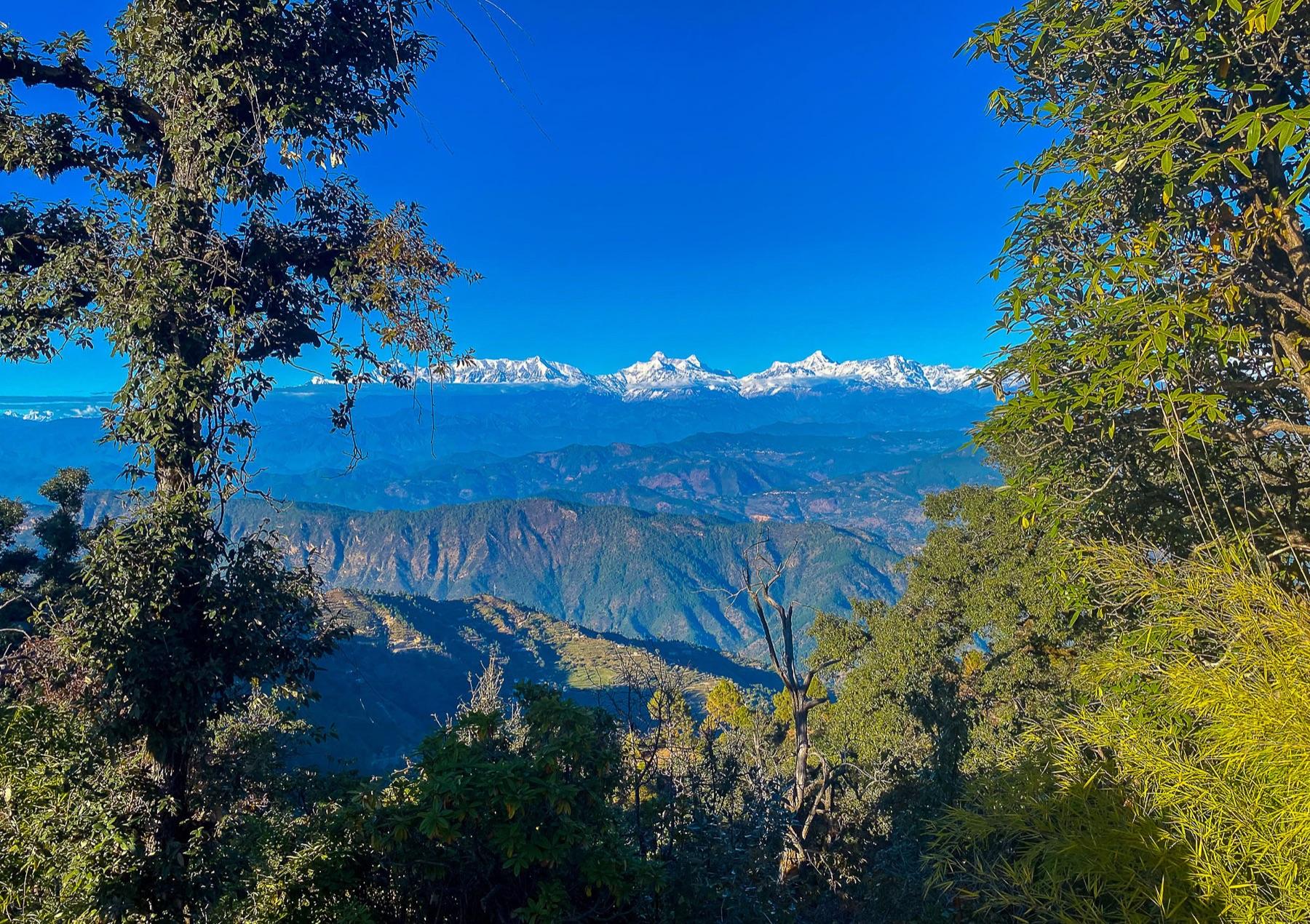
And the hills, of all things, were not new to me. I had studied engineering at KEC, Dwarahat, and through those college years I'd travelled these very roads — and been sick on nearly every one of them. By the time I finished, I had quietly promised myself I would never have to come back to these hills again. I didn't know then that destiny had other plans, and would bring me back this very way — as a bride, to stay.
There was something almost funny in it, if I'd had the stomach to laugh: the roads I had sworn off forever were now the roads carrying me home. Life has a way of returning you to the places you mean to leave behind.
Into the village, after dark
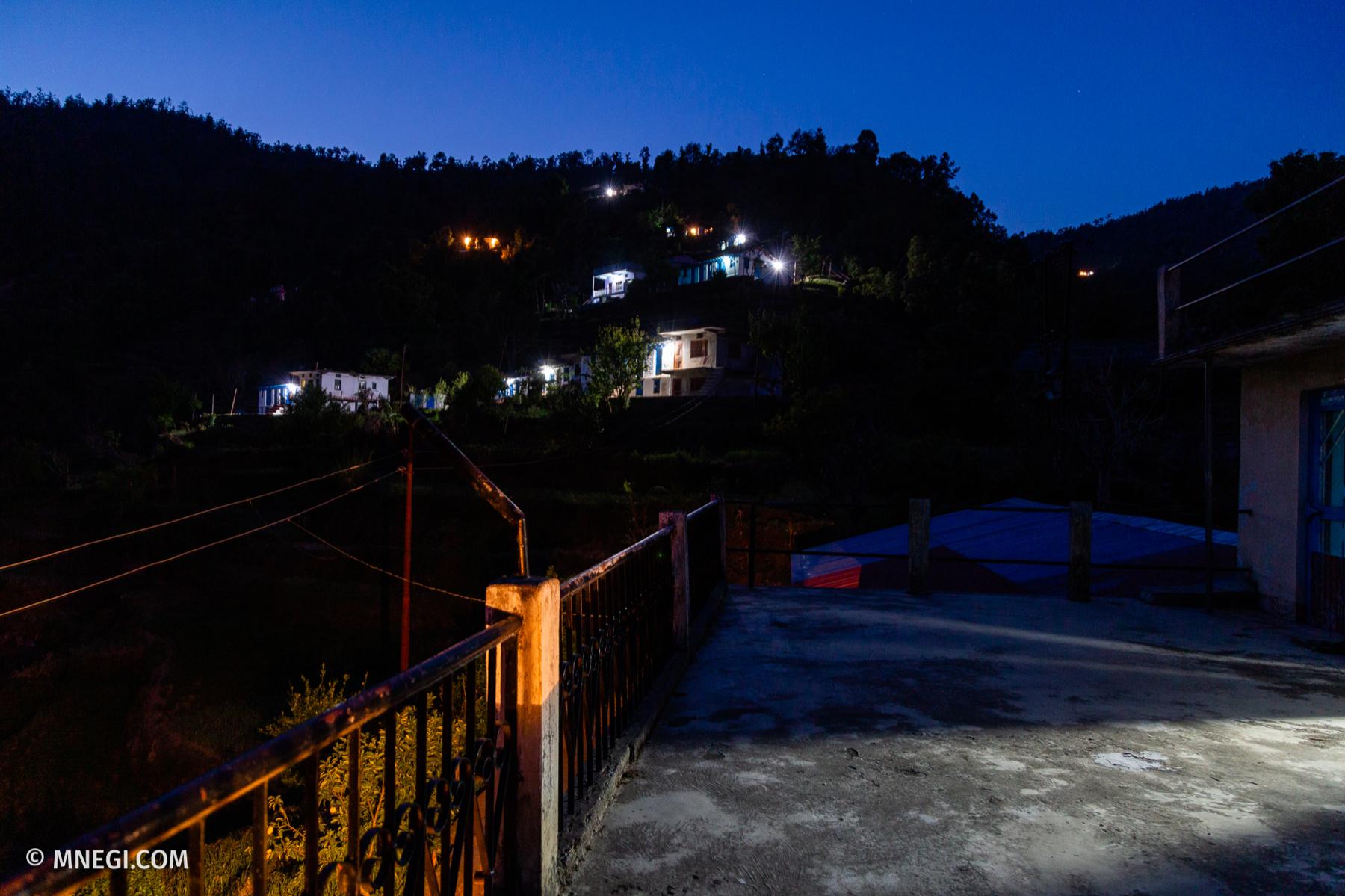
It was late by the time we reached — somewhere around half past ten, close to eleven at night. The road then ran only as far as Mirtola, and even that was a private one; we were kindly given access to use it. From Mirtola, the last stretch up to the village was made the old way — I was carried in a doli, swaying up the dark path by lamplight to a house I was meeting for the very first time, in the very middle of the night.
Try to picture it: you have been awake for the better part of two days, sick for most of one of them, and now you are being carried in the dark up a hillside you cannot see, toward a house you have never entered, to begin a life you cannot yet imagine — all of it in the deep cold and quiet of a hill night. I don't think I was frightened, exactly. I was too tired for fear. Mostly I remember the swing of the doli, the bob of the lamps, and the sense of going up, and up, into the dark.
The welcome
There was a welcome waiting, and more rituals still to be done. It was my mother-in-law and my sisters-in-law who took me in hand and saw the ceremonies through on their side, gently, the way the women of a house always do. Beyond that, I confess, I remember almost nothing — the day had simply emptied me out. By the time it was finally, fully over, I was exhausted to the very core, and I think I must have slept the moment I was allowed to.
I have been told, since, more about that night than I can remember of it myself — who was there, what was said, how the household had waited up for the bride. It has become a family story, told back to me, and I listen to it almost as though it happened to someone else. In a sense it did: the exhausted girl in the doli and the woman who has now spent more of her life inside this house than out of it are not quite the same person. The second one was born, I think, somewhere on that long, dark road.
The first morning
What I remember next is the morning — a bright, sunny winter morning, the clean cold light of the hills coming through. There were still rituals to follow, the gentle business of a new bride's first day, but in the daylight everything looked different from the blur of the night before. For the first time I could actually see where I had come to: the house, the slopes, the long view I would wake to for years to come. The place that had been only a name, and a long sickening road, was suddenly real around me.
There is a particular gentleness to a Kumaoni household in those first days with a new bride — the older women steering you through customs you half-know, the small kindnesses, the cup of chai pressed into your hands before you have even asked. I was still tired, still finding my feet, still a stranger to the place if not quite to the people. But the panic of the night before had gone, burned off with the morning mist, and in its place was something quieter: the first faint sense that this might, one day, be mine.
How I feel about it now
People sometimes ask how I look back on that day, all these years on. The honest answer is a simple one: good. The exhaustion has long since faded; what's left is a quiet astonishment that all of this — the house, the hills, the family, the whole shape of my life — began with that one impossibly long, sick, sleepless journey to a place I had never seen. Life, it turns out, can be built on the most unpromising of beginnings.
It did not happen overnight, of course. A new bride in a new house — in a new climate, a new tongue, a new rhythm of days — does not feel at home the morning after; that came slowly, over seasons, in a thousand small ways. A recipe learned at my mother-in-law's side. A path memorised. A first winter survived, and then many more. Children raised in these rooms. Somewhere in all of that, without my ever quite catching the moment it happened, the unknown house at the end of the unknown road simply became mine — the centre of everything, the place I can no longer imagine a life without.
Everything that has happened since — the children, the slow learning of this house and these hills, the long work of making it a home others could share — grows out of that first exhausting day. I sometimes think of the bride in the doli, sick and frightened and braver than she knew, and I want to tell her it turns out well. Better than well — beyond anything that frightened, sick young woman could have dared to hope. She is being carried up a dark path to the best thing that ever happened to her, and she has no idea. I could not have known it then — but I was arriving, at last, home.

About the author
Roma Bisht
Owner & host
Roma looks after the day-to-day of Kunja Village Homestay — the welcomes, the meals, and the small comforts that turn a house into a home.
More about RomaKeep reading
Related pieces
 Renovation
Restoring a legacy, not just a home
When we set out to do up the old house, the goal was never just a comfortable place to stay — it was to restore a legacy, and bring a hundred-year-old home back to life.
Read it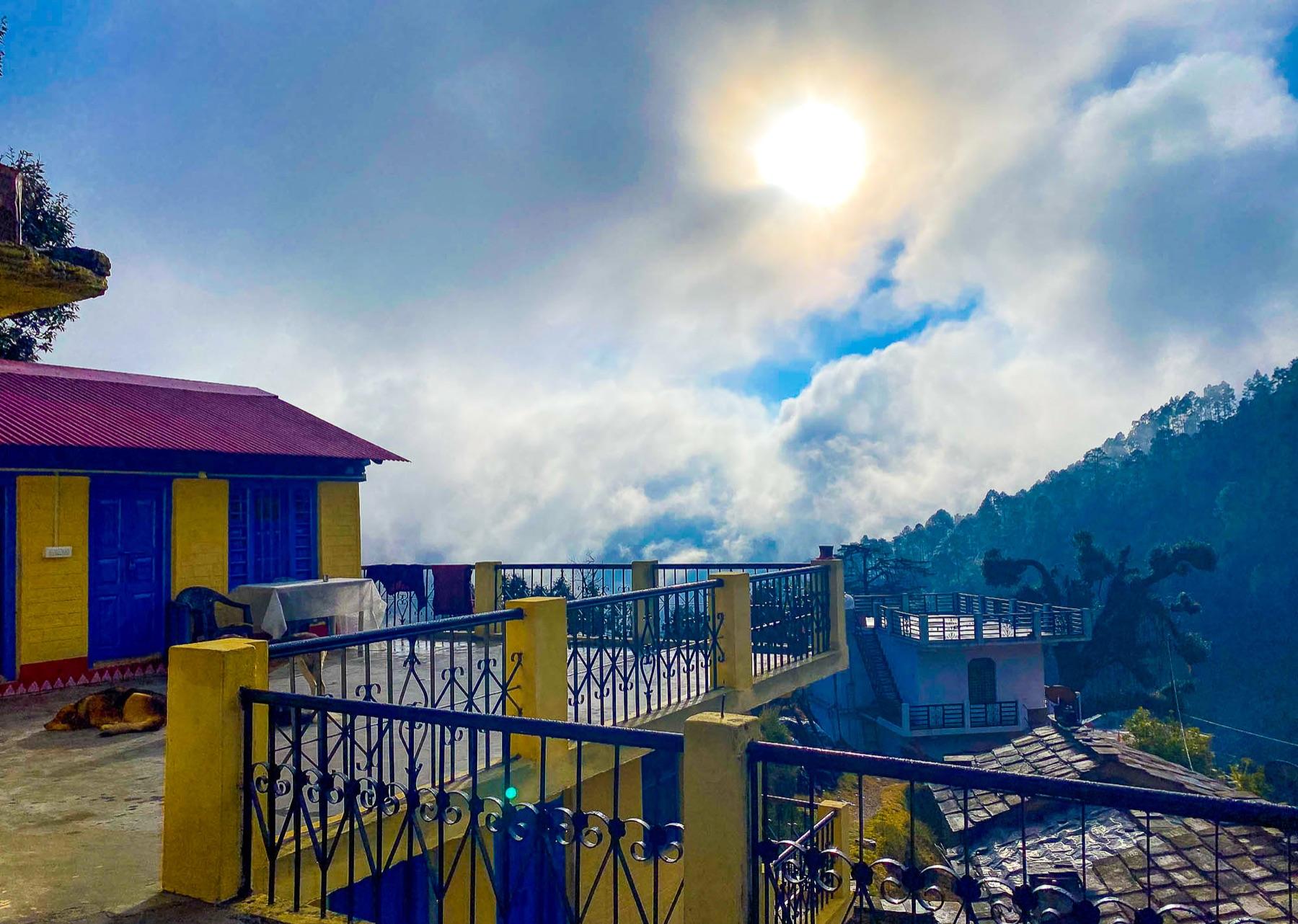 Connectivity
The road that brought it home
None of the rebuilding would have been possible without something far more basic than money or labour: a road — and the steady flow of goods it finally let through.
Read it The Ritual
A lifetime of comings and goings
On the small ritual that has welcomed and blessed every guest of these hills for as long as I can remember — and what it has meant to grow up inside it.
Read it
Comments
No comments yet — be the first to share a thought.