
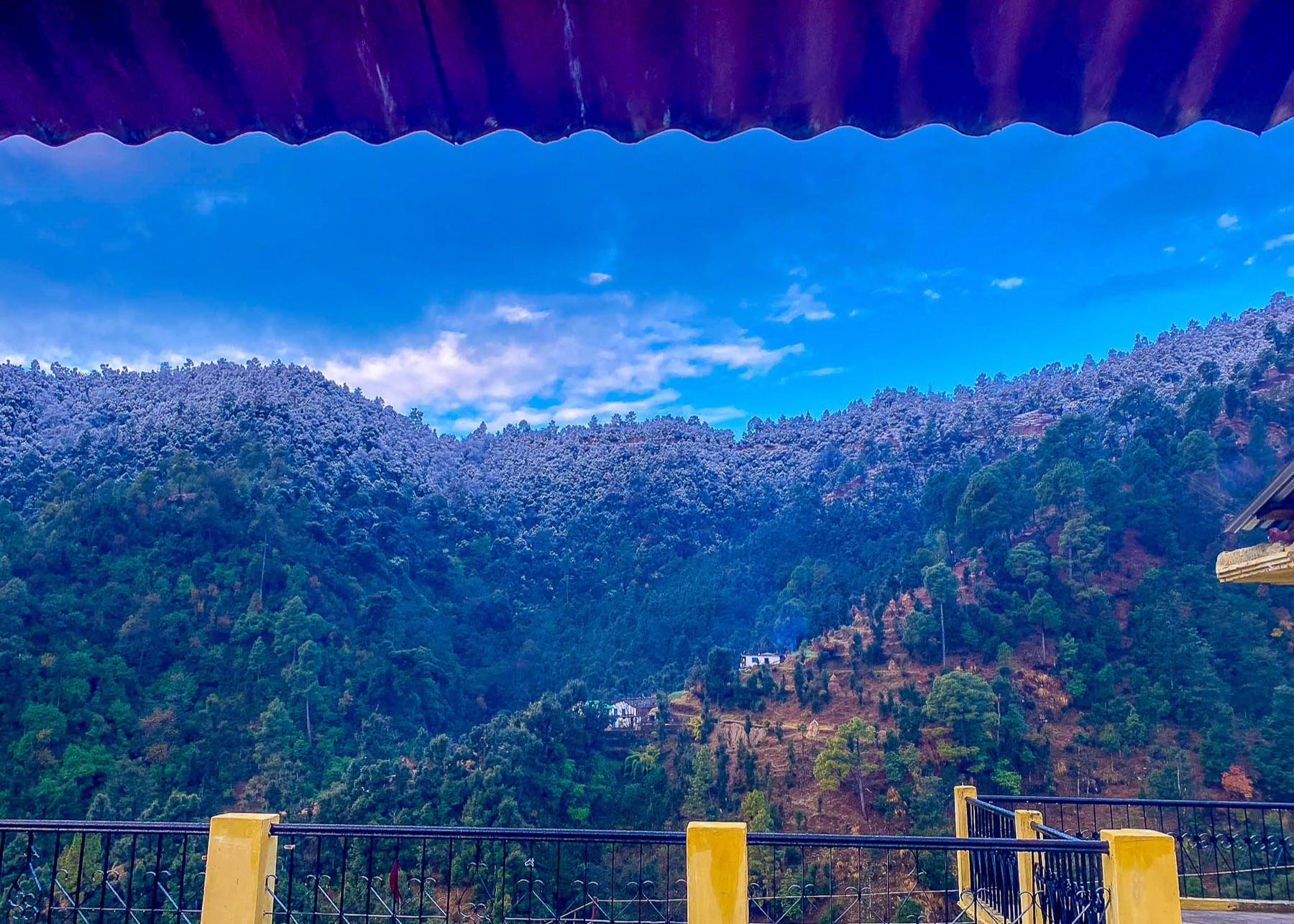
2026
The birding year in Kumaon, month by month
Which birds are around when — from the spring nesting rush to the winter visitors down from the high Himalaya. A seasonal guide to birding around Kunja.
Back to the journal
Contents
- 01The birds that never leave
- 02Spring — March to April
- 03Summer — May to June
- 04Monsoon — July to September
- 05Autumn — October & November
- 06Winter — December to February
- 07The high country
- 08The shoulder weeks
- 09Down to the foothills
- 10A few to look out for, by season
- 11Reading the day
- 12If you're planning a visit
- 13What to bring, season by season
- 14Whatever the month
- 15A year, not a list
Birding around Kunja changes completely with the seasons — so completely that the same patch of hillside can feel like a different country in March than it does in December. The birds are always here; but who is here, and what they're doing, turns over through the year, and knowing roughly what to expect when is more than half the pleasure. Here is the year as the birds live it — and, below, the whole of it laid out at a glance.
Before the month-by-month, one idea worth holding onto: in the Himalaya, much of the movement is up and down rather than in and out. Many birds don't leave the mountains for the year so much as ride them — climbing to breed in the high forests and meadows in summer, and dropping to the warmer middle slopes, where Kunja sits, to escape the snows of winter. This 'altitudinal migration' is why our winter birds and our summer birds can be so different without any of them travelling terribly far. Keep it in mind and the year below makes more sense.
The birding year at a glance
- Dawn chorus at its peak
- Vocal, active birds
- Nesting begins
- Breeding colour
- Calling cuckoos
- Go out at first light
- Paradise Flycatcher
- Nests and young
- The greenest forest
- Endless visibility
- Quiet passage migration
- Best for first-timers
- Redstarts & rosefinches
- Thrushes & accentors
- Foothill waterbirds
The birds that never leave
Against this turning cast, a core of birds is with us all year round, and these become the familiar furniture of the place: the house sparrows in the eaves, the red-vented and Himalayan bulbuls in the hedges, the great barbet booming from the oaks, the grey treepies and red-billed blue magpies sweeping through, the oriental magpie-robin singing from a post, the spotted doves, the streaked laughingthrushes scolding in the undergrowth. Learn these dozen first. They are the reference against which every seasonal visitor is measured — and on a quiet day, when nothing rare is moving, they are company enough.
Spring — March to April
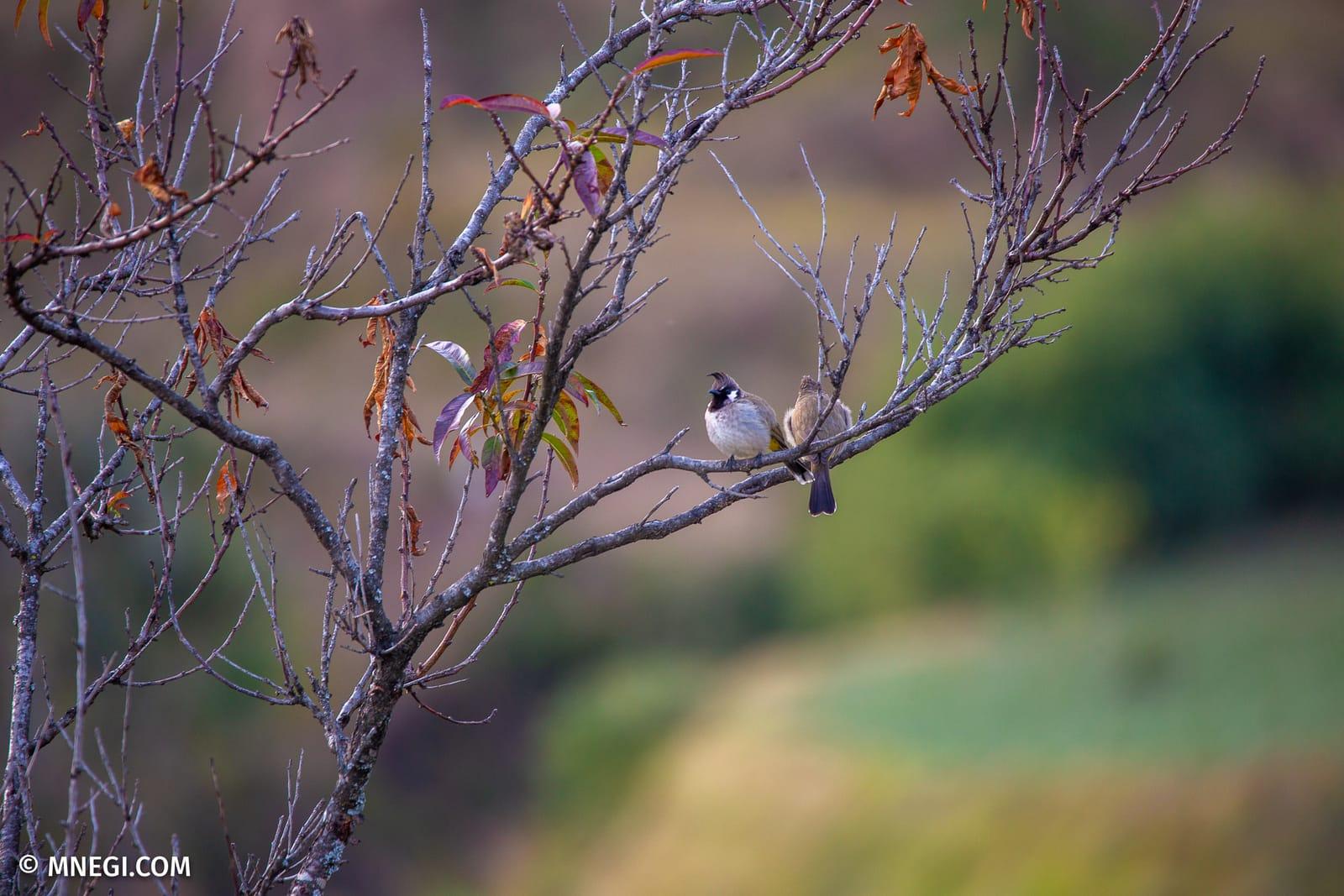
Spring is the loudest, busiest, easiest time, and the season we'd point any beginner towards. The resident birds — the bulbuls, the great barbet, the thrushes, the tits and minivets — come into full song and begin to nest, and the courtyard rings from first light with a chorus that builds week by week. The air is sharp and clear after the winter, the heavy summer leaf hasn't yet closed the canopy over, and the birds are too busy with territory and courtship to be shy. You see more, and you see it more easily, than at any other time.
It is the best season to learn voices, too, because every singer is advertising itself at the top of its register. Sit on the terrace with a mug of tea through the first hour of light and you can pick the year's whole resident cast apart, one song at a time.
Watch, too, for the small dramas of courtship and nest-building that spring sets going everywhere: a pair of barbets taking turns at a hole in a dead branch, sunbirds flashing in the flowering shrubs, a robin singing the same phrase from the same post at the same hour each morning. Spring is not only the easiest birding — it is the most full of life, the season when the hillside is visibly busy with the year ahead.
Summer — May to June
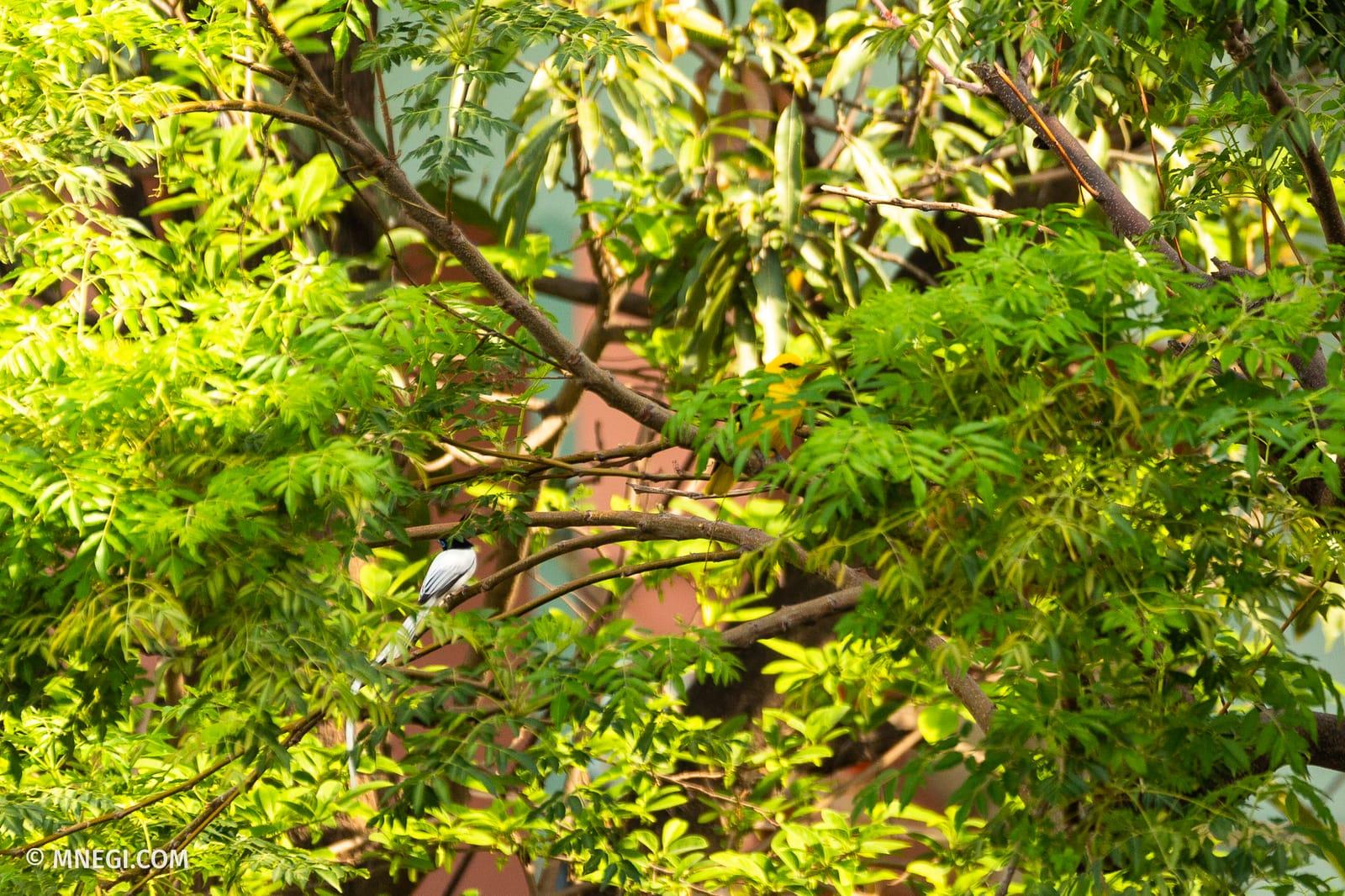
As spring tips into summer, the breeding visitors arrive up from the plains and the foothills. This is the season of the Indian Paradise Flycatcher, the long white ribbons of the male trailing through the shade like something out of a story; of cuckoos — the hawk-cuckoo's rising, maddening 'brain-fever' call, the Indian cuckoo's four soft notes — sounding unseen from the canopy; and of birds everywhere busy with nests, eggs, and hungry young.
It is the warmest, brightest part of the year before the rains, and the birds, while busy, are not yet hidden by the heavy wet leaf. Beat the midday heat by being out early — by mid-morning the hillside falls quiet and waits for the cool of evening.
Monsoon — July to September
Then the monsoon breaks, and birding becomes patient work. You watch the sky and slip out between the showers, into the wet green hush after rain when the forest drips and steams. It is not the easy season — but it is the lushest, the most alive, and the one where you're most likely to catch the quiet dramas of nesting: a flycatcher ferrying insects, a barbet excavating a hole, a cuckoo's foster-parents run ragged. Wear something that dries, watch your footing on the wet paths, and you'll have the hillside almost to yourself.
Autumn — October & November
Autumn is, for many of us, the finest birding of the whole year. The monsoon clears to a washed, brilliant light, the great snow peaks return to view after months behind cloud, and the air turns kind — warm days, cool mornings, endless visibility. The breeding frenzy is over, the birds are settled and feeding up, and there's a quiet passage of migrants drifting through on their way down from the heights.
It is the season we'd send a first-time birder out into without hesitation. Nothing is hidden, the light is generous to the eye and the camera alike, and the hills are at their most beautiful. If you can only come once, come in October.
It is the photographer's season above all: the combination of soft, low, clear light and settled, well-fed birds is as good as it ever gets up here. Many of the photographs across this site were made in these few golden weeks between the rains and the cold.
Winter — December to February
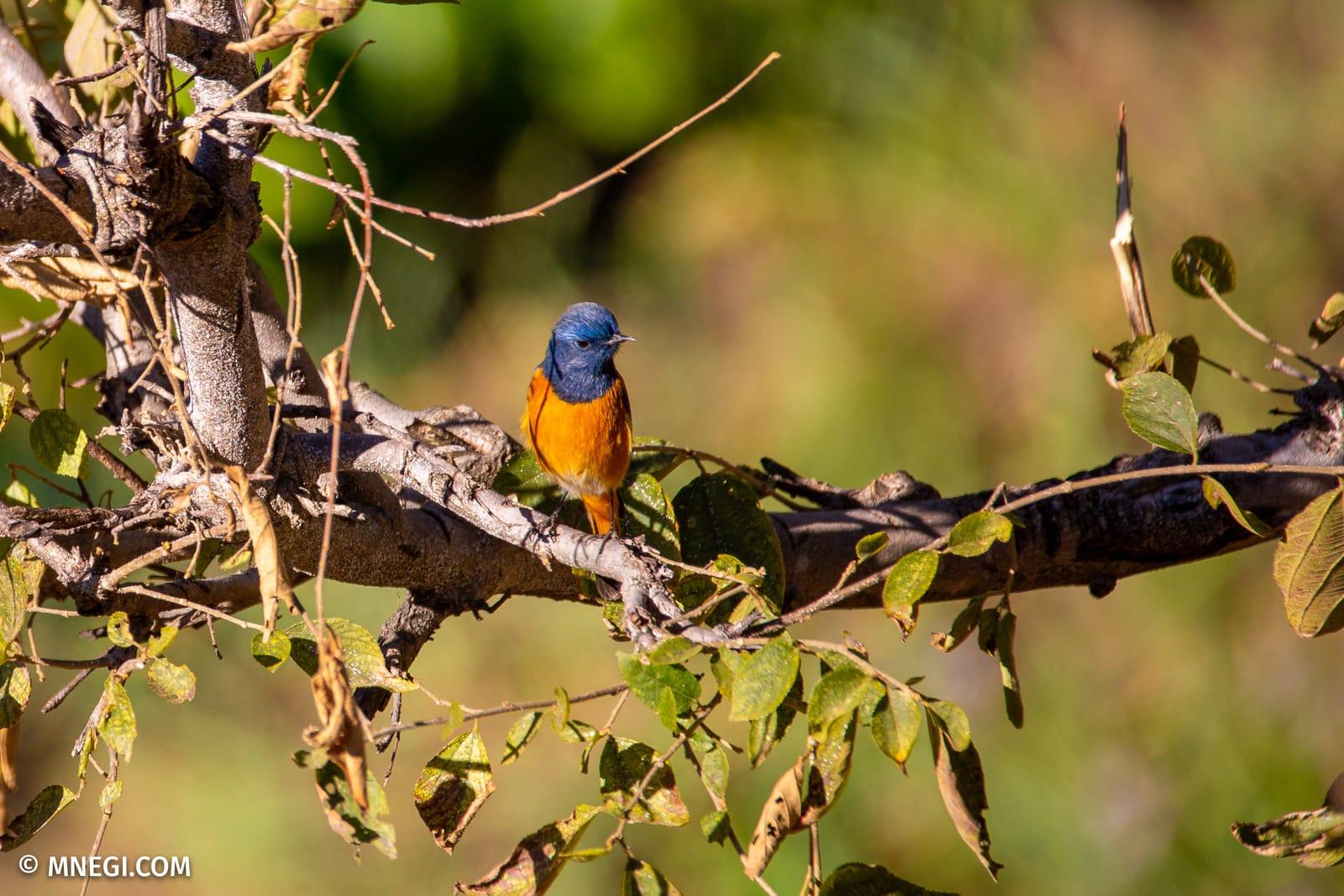
Winter is when the mountains send their birds down to us. As the snow settles on the high country, the birds that summered up there — blue-fronted and white-capped redstarts, rosefinches, a variety of thrushes, accentors creeping along the forest edge — drop to the warmer middle slopes around Kunja, and species that simply aren't here the rest of the year suddenly are. Lower still, the foothills and wetlands around Haldwani fill with waterbirds and birds of the plains, an easy day-trip into an entirely different cast.
Winter is also the season of the mixed feeding flock — that travelling, restless band of tits, warblers, nuthatches, treecreepers and the rest that moves through the bare forest together, sweeping a stretch of hillside and then moving on. Find one and you can have twenty birds in five busy minutes, and then nothing for an hour. Wrap up warm, let the late-morning sun take the edge off the cold, and walk the sunny slopes where the flocks gather.
The high country
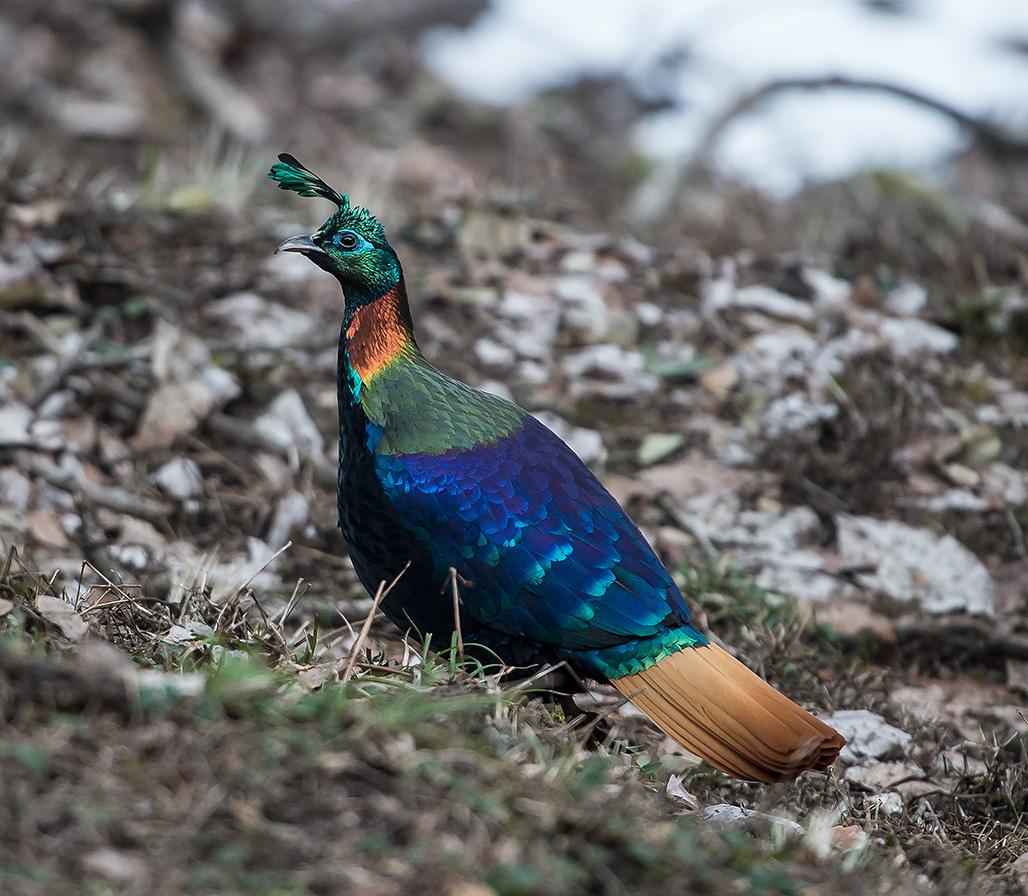
The high country runs on the opposite clock. The routes up to Chopta, Munsyari, the Binsar ridge and the alpine meadows are at their best in the warmer months, when the snow has pulled back and the high-altitude specialities come within reach of a determined walk. This is Monal country — the Himalayan Monal that explodes from a hillside in a clatter of metallic colour — along with the koklass and kalij pheasants, the snow partridge higher up, and the great lammergeier riding the thermals on near-three-metre wings.
Plan these for late spring through autumn, not the snowbound depths of winter, when the passes are shut and the meadows buried. A high trek is a different kind of birding from a morning on the terrace — harder won, and unforgettable when it comes off.
The shoulder weeks
Some of the best birding falls in the seams between seasons — the shoulder weeks when one cast is arriving and another hasn't quite left. Late February into March, as the winter visitors linger and the residents start to sing, you can have both at once. Early autumn, as the breeders fall quiet and the first passage birds appear, is much the same. If you can time a visit, aim a little off the obvious peaks; the overlap weeks often hold the most variety of all.
Down to the foothills
It's worth remembering that you are never far, in winter especially, from a completely different set of birds. A drive down to the foothills — to the wetlands and scrub around Haldwani, or further to the river forests of Corbett — drops you into the world of the plains: kingfishers and lapwings, drongos and orioles, hornbills and fish eagles, and on the winter shingle of the Ramganga the strange, lovely ibisbill. One day down there, set against a week up here, gives a visit real range. The hills and the foothills are two birding worlds stacked one above the other, an hour or two apart.
A few to look out for, by season
If you like something to aim at: in spring, the great barbet and the long-tailed minivets at full song; through the monsoon, the paradise flycatcher and the calling cuckoos; in autumn, the quiet passage and the verditer flycatchers in their best light; in winter, the redstarts on every wall and the rosefinches in the bushes, with a day down at Haldwani or Corbett for the waterbirds; and, for the ambitious, a warm-season trek up to Chopta or Munsyari for the Monal. None of it is guaranteed — that's rather the point — but knowing what's in season turns a hopeful wander into a hunt with a purpose.
Reading the day
Within any season, the weather of a single morning matters. The best birding days are still and bright with a touch of cold in them — birds active, sound carrying, light clean. A windy morning is hard work: the small birds sit tight and low, and you hear nothing over the rush of the trees. A grey, drizzly day can be surprisingly good in the warmer months, the soft light gentle and the birds unbothered, but a hard downpour shuts everything down. Learn to read the morning out of the window before you set out, and to forgive the days that don't deliver — there is always tomorrow's dawn.
If you're planning a visit
For an all-round first trip, it is hard to beat the stretch from mid-October to late November — kind weather, clear air, and easy, abundant birds, with the option of a foothill day-trip thrown in. Come in spring, March into April, for the song and the nesting and the longer, warmer days. Brave the winter if it's the high-mountain visitors and the foothill waterbirds you're after, and you don't mind the cold. The one season to come prepared for patience is the monsoon — wonderful, green, and wet. Whenever you come, give yourself early mornings, and give yourself more than a day or two; the hills reward the unhurried.
What to bring, season by season
Little changes in the kit from season to season, but a few things help. In winter, layers, gloves, and a flask — the dawn cold is real, and you'll be standing still in it. In the monsoon, a poncho that covers you and the binoculars both, and footwear with grip for the slick paths. In the warm, clear months, sun, water, and an early enough start to be out before the heat. And in every season, the same three constants: binoculars, a notebook, and patience.
Whatever the month
For all that the cast changes, one rule holds in every season: the hour after sunrise is the richest, and an early start beats every other advantage. Pick your time of year for what you most hope to see — the nesting drama and full song of spring, the breeding colour and ribbons of summer, the clear-light passage of autumn, or the high-mountain visitors of winter — and then simply be out, quiet and still, as the light comes up. The hills will do the rest.
A year, not a list
Birders love a list, and there's nothing wrong with a long one. But the real gift of birding a place through its whole year isn't the count — it's the calendar you build in your own head: the week the barbet starts up, the morning the first paradise flycatcher appears, the cold dawn the redstarts arrive on the walls. Stay anywhere long enough and the year stops being weather and becomes a sequence of old friends arriving and leaving. That, more than any rarity, is what keeps us on the terrace at first light, season after season. Come and watch a year turn here, and you'll see exactly what we mean.
About the author
Manohar Negi
Owner & host
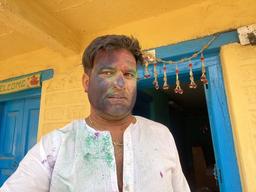
Manohar grew up in these hills and never really left. A photographer by craft and a host by heart, he turned the family home at Kunja into a place to share — and most of the frames you see across this site are his.
More about Manohar
Keep reading
Related pieces
 Birding
How to see more birds: a field guide for beginners
You don't need expensive gear or years of practice — just a few simple habits. Here's how to turn an ordinary morning walk into one full of birds.
Read it Birding
Photographing the birds of the hills: a quick start
A long lens helps, but patience and respect matter more. A beginner's guide to making honest photographs of the wild birds of the Kumaon hills.
Read itBirdingThe gear we use for bird photography
Guests often ask what's in the bag. The honest answer: not much, and nothing new. Here's exactly what we carry up the hill, and what each piece is for.
Read it
Comments
No comments yet — be the first to share a thought.