
2026
The gear we use for bird photography
Guests often ask what's in the bag. The honest answer: not much, and nothing new. Here's exactly what we carry up the hill, and what each piece is for.
Back to the journal
Contents
Guests often ask what's in the bag. The honest answer is: not much, and nothing new. Here's exactly what we carry up the hill, and what each piece is for.
We've linked each piece below. As an Amazon Associate, Kunja earns a small commission from qualifying purchases — at no extra cost to you.
A note before the list: we are not gear obsessives, and you needn't be either. The kit below was assembled slowly, over years, out of what we could afford and what proved itself in the field — not out of reviews or wish-lists. Almost all of it is old, none of it is fashionable, and all of it works. If a single thread runs through this piece, it's that good bird photography is bought with patience and fieldcraft far more than with money.
The cameras
Two bodies, a generation apart. The Canon 5D Mark III is our main camera — a full-frame workhorse that holds up beautifully in the low, soft light of dawn and copes with the high ISOs that hill birding so often demands. Beside it lives a Nikon D3100, an old entry-level body that's a standing reminder you don't need the latest thing to make a good photograph: it still earns its place as a second camera, and as a forgiving one to learn on.
Why a full-frame body for birds, when so many bird photographers swear by crop sensors for the extra reach? Honestly, for the low light. Hill birding happens at dawn and dusk, under canopy and in mist, and the full-frame sensor's cleaner high-ISO files are worth more to us than a touch of extra magnification — we can crop in afterwards, but we can't un-noise a muddy file. The little Nikon, meanwhile, does the humble, important jobs: a backup when the Canon is busy or being cleaned, a body to hand to someone learning, and a quiet reminder that the camera matters far less than the eye behind it. We mostly shoot in aperture or shutter priority, lean on auto-ISO with a sensible ceiling, and keep things simple enough that the settings never get between us and the bird.
The lenses
The lens that does almost all the birding work is the Sigma 150-600mm f/5-6.3 DG OS HSM. Birds are small and wary, and that 600mm of reach is what lets you fill the frame from a respectful distance — it's the one piece of glass that's almost always on the camera up here.
For closer, slower subjects there's the Sigma 70-300mm f/4-5.6 DG Macro — lighter, handier, and happy to double as a macro lens for the dragonflies, flowers and small life around the courtyard when the birds go quiet.
The 150-600 — the 'Bigma', as everyone calls it — is not a perfect lens, and it's worth being honest about that. It is heavy; the aperture narrows to f/6.3 at the long end just when the light is poorest; and it is happiest stopped down a touch and given a steady support. But for the money it is a genuinely remarkable thing: 600mm of reach that fills the frame with a small bird from right across a slope, without ever crowding it. We've learned its habits — brace it, shoot in good light where we can, and don't expect miracles in the gloom — and it rewards us, season after season.
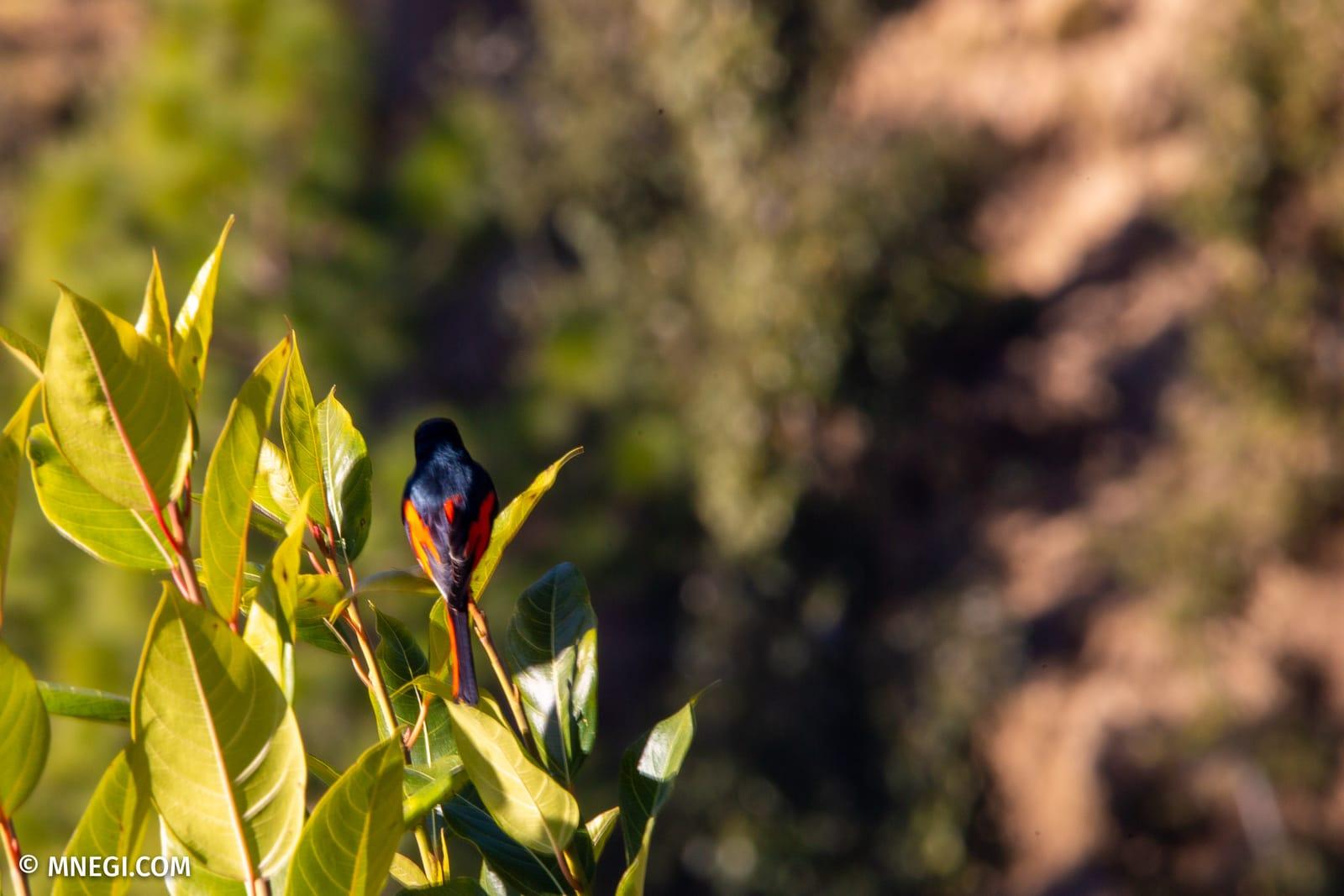
Holding it steady
At 600mm the smallest shake shows, so support matters nearly as much as the lens. We lean on three things, depending on the day: a heavy video tripod that stays rock-steady through a long wait at a known perch; a lighter Manfrotto tripod that's easier to carry on a walk; and a monopod for when you're on the move and just need to take the weight off your arms without losing the freedom to swing onto a bird.
Each support has its day. The heavy video tripod, with its smooth fluid head, is for the long game — set up at a known perch or a nest, framed and focused, we can wait an hour for the bird and then pan with it cleanly when it comes. The lighter Manfrotto is the walking tripod, carried on the shoulder for a morning's wander when we don't yet know where the birds will be. And the monopod is the in-between: it takes the dead weight of the long lens off the arms while leaving us free to move and to swing up onto a bird in a heartbeat. On a long morning, that single pole saves an aching shoulder and a hundred missed chances.
A remote shutter
For the truly still frames — a bird at a fixed perch, or a nest watched from a distance — a Canon RC-6 remote lets us fire the shutter without touching the camera at all. No press, no shake, no movement to spook the subject. It's a small, cheap thing that earns its keep many times over.
The same shake-free result can be had, in a pinch, with the camera's two-second self-timer, and on the older bodies we'll sometimes lock the mirror up as well to kill even that tiny internal vibration. But for watching a fixed perch from a few metres back — camera on the tripod, us sitting still and quiet off to one side, finger on the little remote — there is nothing better. The bird never knows the camera is working.
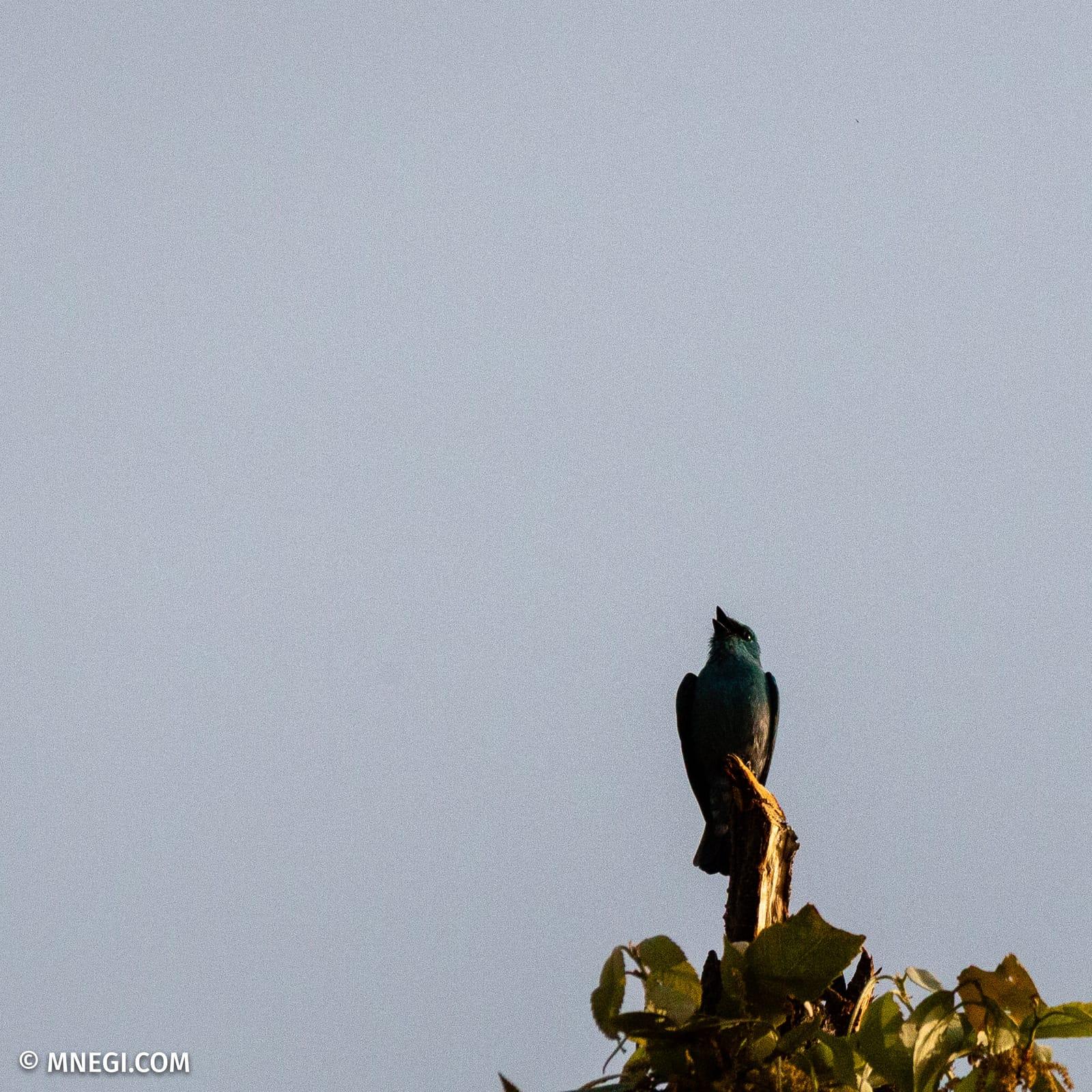
The bag
All of it rides in a Vanguard VEO Select Series camera backpack — room enough for two bodies, the long Sigma, a spare lens and the supports lashed to the outside, and comfortable enough to carry up a hill before first light. A good bag is easy to overlook, right up until you've walked a few kilometres with a bad one.
We pack it the same way every time, so that in the half-dark before sunrise everything falls to hand without thinking: bodies and the long lens in the main compartment, the spare lens and the remote in the lid, supports lashed to the outside, and a blower and cloth in the front pocket for the dust. A bag you can load and unload in the dark, half-asleep, without sending anything down the hillside, is worth a great deal more than its price suggests.
The small stuff
It's the little things, easy to forget, that save a morning: a couple of spare, charged batteries, a fast memory card with room to spare, a lens cloth, a blower, and a head-torch for the walk out in the dark before dawn. None of it costs much or weighs anything, and any one of them, left behind, can end a morning early. We keep a small zip pouch of these permanently in the bag, so there's nothing to remember at four in the morning.
What stays in the bag
A few things we own almost never come out for birds. A flash hardly ever fires on a wild bird — the light that makes a bird photograph is the early sun, not a burst from a hotshoe, and the flash is as likely to spook the subject as to help. ND filters, lovely for long exposures of water or sky, rarely find a place in birding either. And binoculars, though we'd never head out without them, live with the birding kit rather than the camera bag — they're for the eyes, for finding and watching, not for the lens.
It's worth saying what those things are good for, since we own them for a reason. The flash earns its keep indoors and after dark — a portrait in the kitchen, a festival in the courtyard — just never on a wild bird. The ND filters come out for the streams and waterfalls, smoothing moving water into silk on a long exposure. And the binoculars are, frankly, the most important optical tool we own: you find ten birds with binoculars for every one you photograph, and a morning's birding is mostly watching, not shooting. They simply belong to a different bag.
Caring for it in the hills
The hills are hard on gear, and a little care goes a long way. Dust is the constant enemy, so we change lenses as seldom as possible, and never in a wind; a blower and a soft cloth live in the front pocket. The monsoon brings damp, which brings fungus — the quiet killer of lenses — so in the wet months everything goes back into the bag with sachets of silica gel, and comes out to air and dry whenever the sun does. Cold thins batteries quickly, so a spare lives in an inside pocket, close to the body and warm. And on a frosty dawn we let the cold camera warm slowly in the bag before opening it indoors, so it doesn't fog. None of this is difficult; all of it is the difference between gear that lasts a decade and gear that dies in a season.
If you're buying from scratch
People often ask what they should buy to start. Our honest advice: spend on reach and autofocus, not on a famous badge. A capable used body and a single telephoto that reaches at least 300mm — further if you can — will take you a very long way, and a superzoom bridge camera is a perfectly respectable start that fits in one hand. Add a cheap, sturdy support and a spare battery, and you have everything you need. Buy used to stretch the budget; the second-hand market is full of perfectly good gear sold by people chasing the newest thing. Then stop shopping and start watching birds — because the next upgrade that will actually improve your photographs is almost always another hour at dawn, not another lens.
On reach, and the upgrade itch
There is always a longer lens, a newer body, a faster everything — and the temptation to believe the next purchase is the one that will finally make the photographs sing. It almost never is. We've watched our own pictures improve far more from learning a bird's perch than from any piece of glass. A teleconverter would give us more reach, true, but at the cost of light and autofocus speed we can't spare in the gloom, so we've left it. The discipline of doing a lot with a little is, we think, part of what makes a photographer at all.
Keep it simple
If there's a philosophy to all this, it's restraint. One body on the shoulder, the long lens fitted, the settings already dialled, a single spare in a pocket — and the rest left in the bag. A photographer fumbling between three lenses misses the bird that a photographer with one lens, ready, will catch. We carry little, we keep it set up, and we spend the saved attention on the birds instead of the kit.
Why we wrote this down
We share all this not because our kit is special — it plainly isn't — but because so many people who'd love to photograph the birds around them are put off by the belief that they must spend a fortune first. They needn't. Nearly everything photographed across this site was made with the modest, ageing, well-loved gear listed above. If it nudges one guest to pick up whatever camera they already own and walk out at dawn, it will have been worth the writing.
Honest kit
None of this is the newest or the most expensive — a decade-old body, a budget second camera, two Sigma lenses and a handful of supports. It's enough. As we've said before, the bird, the light and your patience matter far more than the gear. This is simply what has worked for us, season after season, around Kunja.
If you take one thing from this list, let it be that: the gear is the least interesting part of the answer. Borrow it, buy it old, make do with less — and then go and spend the real currency of bird photography, which is mornings.
About the author
Manohar Negi
Owner & host
Manohar grew up in these hills and never really left. A photographer by craft and a host by heart, he turned the family home at Kunja into a place to share — and most of the frames you see across this site are his.
More about Manohar
Keep reading
Related pieces
BirdingPhotographing the birds of the hills: a quick start
A long lens helps, but patience and respect matter more. A beginner's guide to making honest photographs of the wild birds of the Kumaon hills.
Read it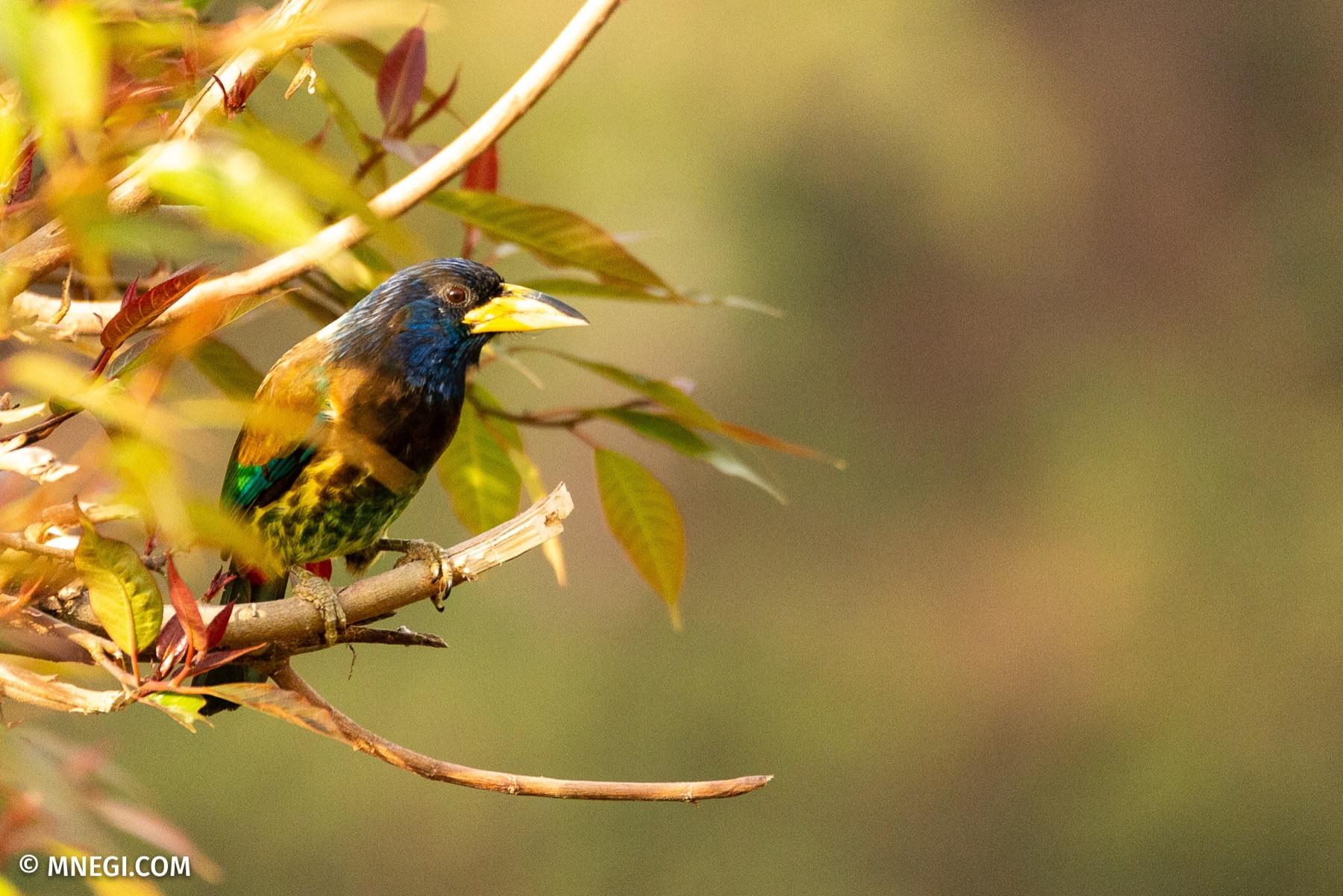 Birding
How to see more birds: a field guide for beginners
You don't need expensive gear or years of practice — just a few simple habits. Here's how to turn an ordinary morning walk into one full of birds.
Read it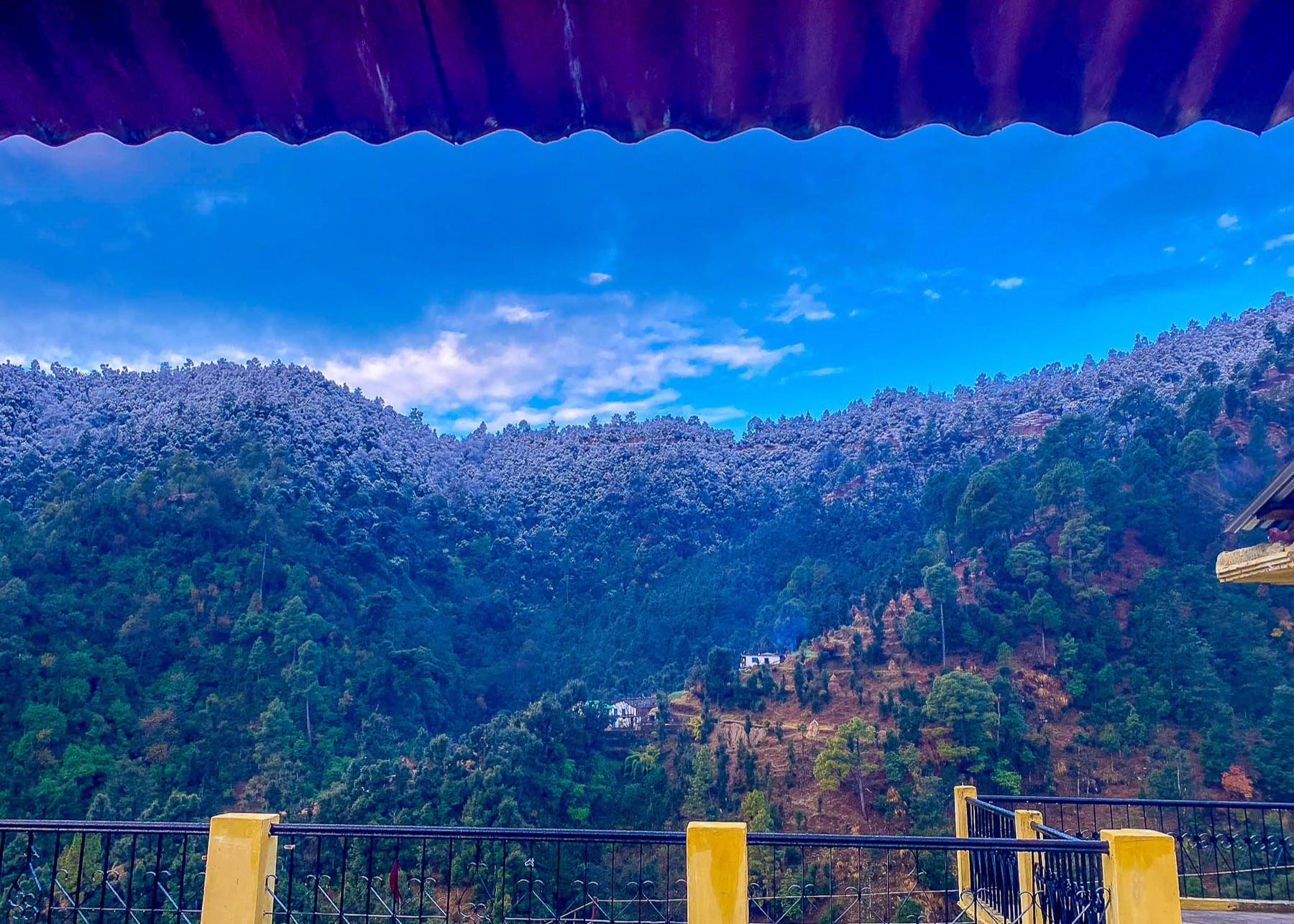 Birding
The birding year in Kumaon, month by month
Which birds are around when — from the spring nesting rush to the winter visitors down from the high Himalaya. A seasonal guide to birding around Kunja.
Read it
Comments
No comments yet — be the first to share a thought.