
2021
Farm-to-plate, because the farm is right here
A season in the kitchen garden, and the plates it sets — most of what you eat here grew ten steps from the stove.
Back to the journal
Contents
- 01The kitchen garden, through the year
- 02Whose hands keep it
- 03The pulses
- 04The flavour-makers
- 05What the hills hand you for free
- 06What we grow, and what we carry up
- 07Stored for the lean months
- 08A day's pickings
- 09A plate that grew ten steps away
- 10What winter brings
- 11The warm months
- 12The green of the monsoon
- 13Why it tastes of something
- 14The quiet wisdom of a hill plate
Ask where the food at Kunja comes from, and the honest answer is: mostly, from just outside the kitchen door. Most of what reaches your plate here grew ten steps from the stove — pulled from the garden that morning, stored from our own harvest, or carried in from a neighbour's field. 'Farm-to-plate' has become a fashionable phrase in the cities; up here it isn't a philosophy or a marketing line. It is simply how a hill household has always eaten, because for most of our history there was no other way to.
This is the story of that garden through the year — the grains and pulses that come with it, the few things the wild hands us for free, and the plates it all turns into: winter, summer, and the long green hush of the monsoon.
The kitchen garden, through the year
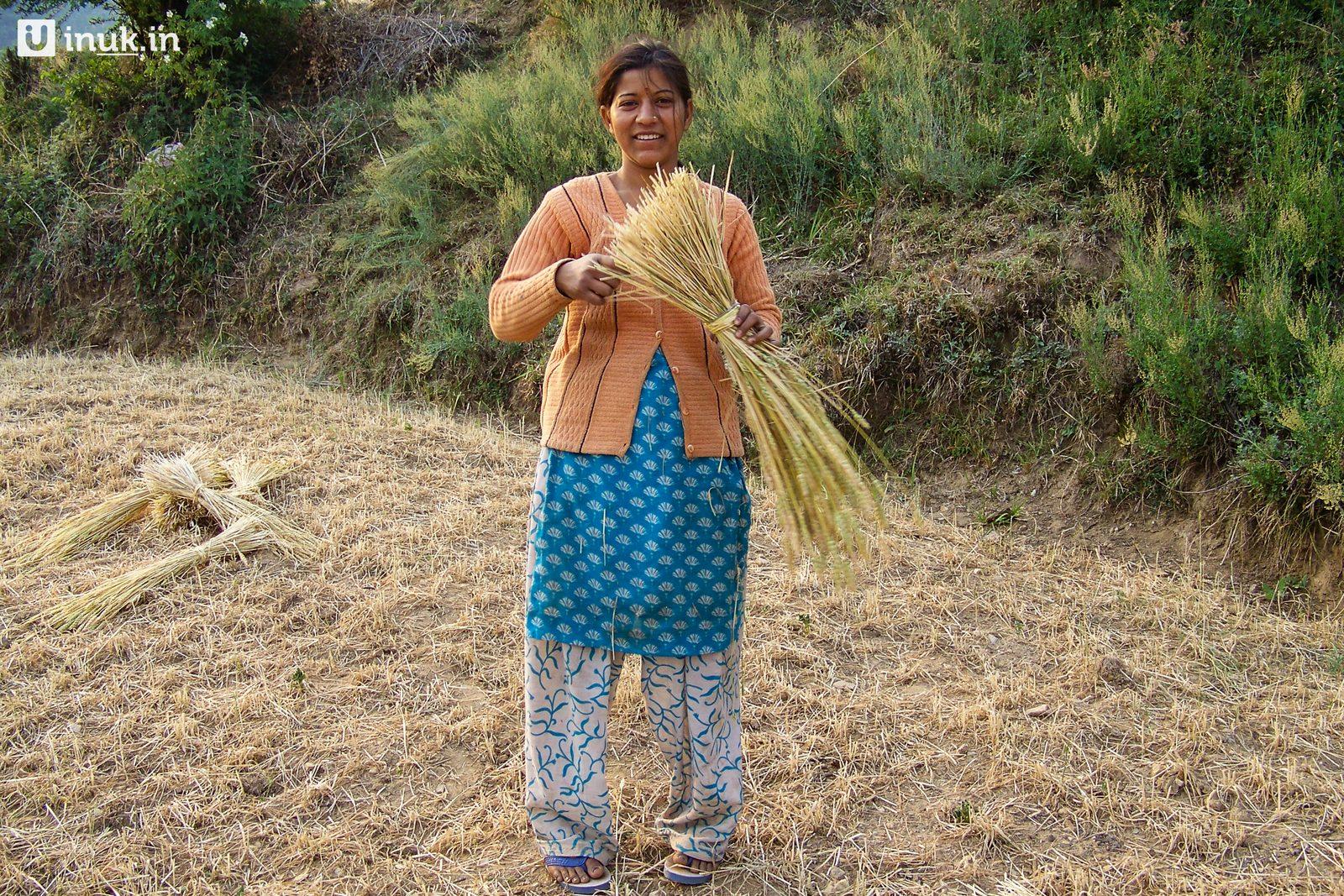
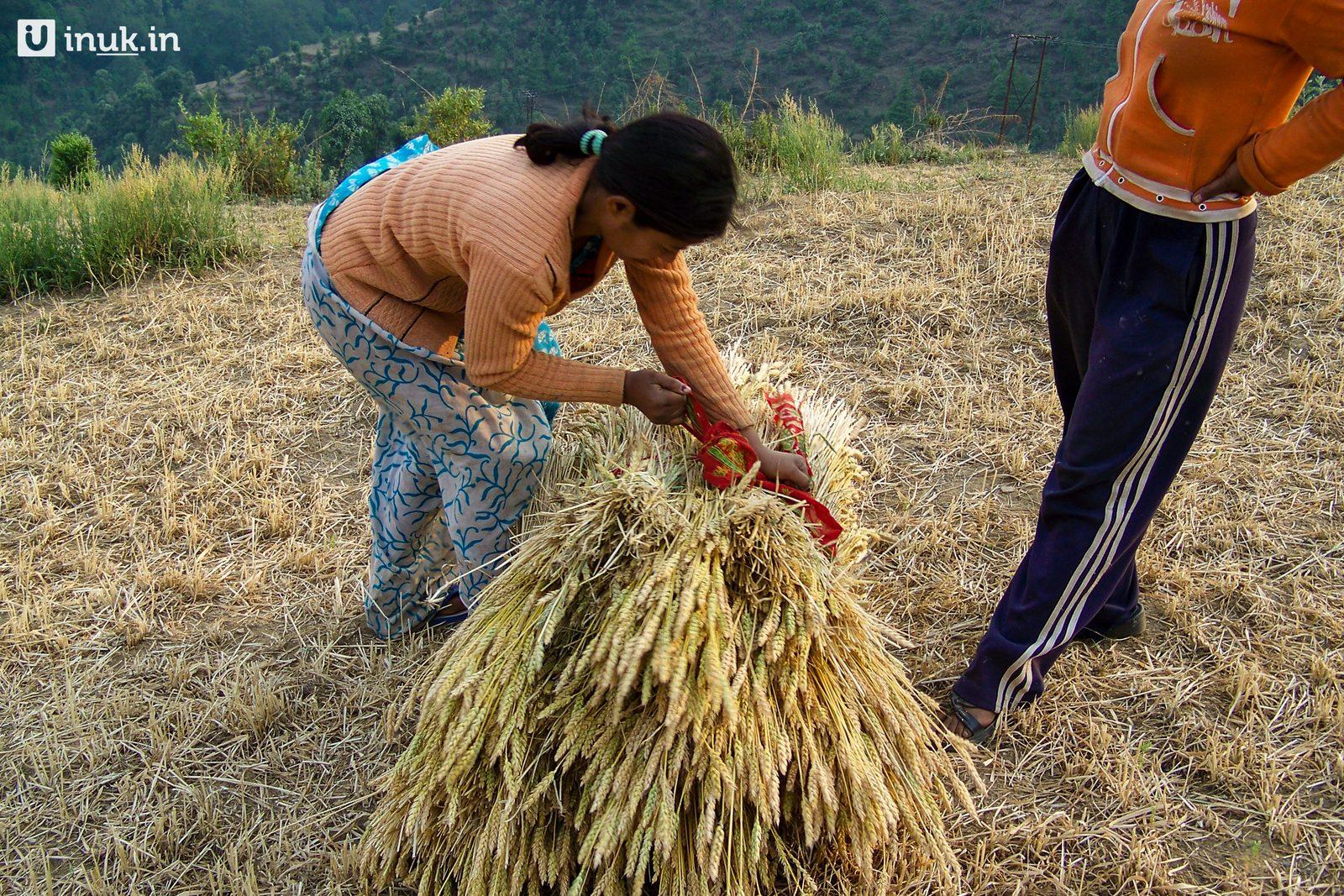
Step out the back and you'll find it: not a tidy ornamental thing, but a working garden, terraced into the slope and turned over season after season. Through the cold half of the year come the winter staples — wheat ripening to gold in the terraces, mustard for its greens and its oil, potatoes, onions and garlic, radish and mint, and the leafy greens: cabbage, cauliflower, and spinach. The spinach is my own quiet favourite — there is nothing like a saag of it, cut ten minutes before it meets the pan.
As the cold lifts and the monsoon comes on, the garden turns over to the warm-weather crops: madua, the finger millet that is the backbone of the hill diet; pinalu, the taro whose corms and leaves we cook a dozen ways; tomatoes, brinjal, pumpkins, cucumbers, and the newer arrivals like zucchini that have crept into hill gardens in the last generation. Nothing here is grown all at once or all year — the garden is a slow wheel that turns with the sun. A bed that holds potatoes in the cold months will hold pumpkins by the rains.
We keep a little of everything rather than a lot of any one thing, the way a household garden has always been kept — for the table, not the market — so that on any given day there is something to pull, and over a year, variety enough to never tire of it.
From the garden
Potato
Aloo — the kitchen's workhorse
Pinalu
Taro; corms and leaves both
Spinach
Palak; a winter saag
Mustard
Sarson — greens and oil
Radish
Mooli; a crisp winter root
Onion & garlic
The base of every dish
Tomato
A warm-season staple
Pumpkin
Kaddu; a monsoon gourd
Cucumber
Kheera; the monsoon treat
Cauliflower
Gobhi; a winter vegetable
Brinjal
Baingan; the warm months
Mint
Pudina; fresh for chutneys
Whose hands keep it
A garden like this is kept by no one in particular and by everyone in turn — but the truth, as in most hill homes, is that it is the women who carry it: the daily, patient, unending round of sowing and weeding and watering and watching, fitted around everything else a day demands. The elders know things no book holds — when to sow by the look of the sky, which corner takes the frost, how to read a plant's thirst before it wilts. That knowledge is the real crop, passed down a generation at a time, and it is worth more than any seed.
The pulses
Alongside the vegetables come the pulses, and in the hills the pulses are no afterthought — they are half the plate, and most of the protein of a largely vegetarian diet. We grow the great Kumaoni dals: rajma, the kidney beans these hills are quietly famous for; bhatt, the little black soybean; gahat, the horse gram; masoor; and chana. Dried after the autumn harvest and stored through the year, they are what a hill kitchen leans on when the garden is bare — a sack of bhatt or gahat is a kind of insurance against a hungry month.
Each has its own place and its own way. Bhatt is roasted, ground and slow-cooked into churkani, or made into the thick, dark dubke. Gahat — believed to dissolve everything from a kidney stone to a winter chill — becomes a dense dal or the soupy ras poured over rice. Rajma is simmered long and patient. None of them are quick; hill pulses ask for time and fire, and reward it.
The grains & pulses of these hills
Madua
Finger millet; the hill staple
Wheat
Golden in the spring terraces
Rajma
The famous hill kidney beans
Bhatt
Black soybean; churkani & dubke
Gahat
Horse gram; winter's warming dal
Masoor
The everyday red lentil
Chana
Gram; stored for the year
The flavour-makers
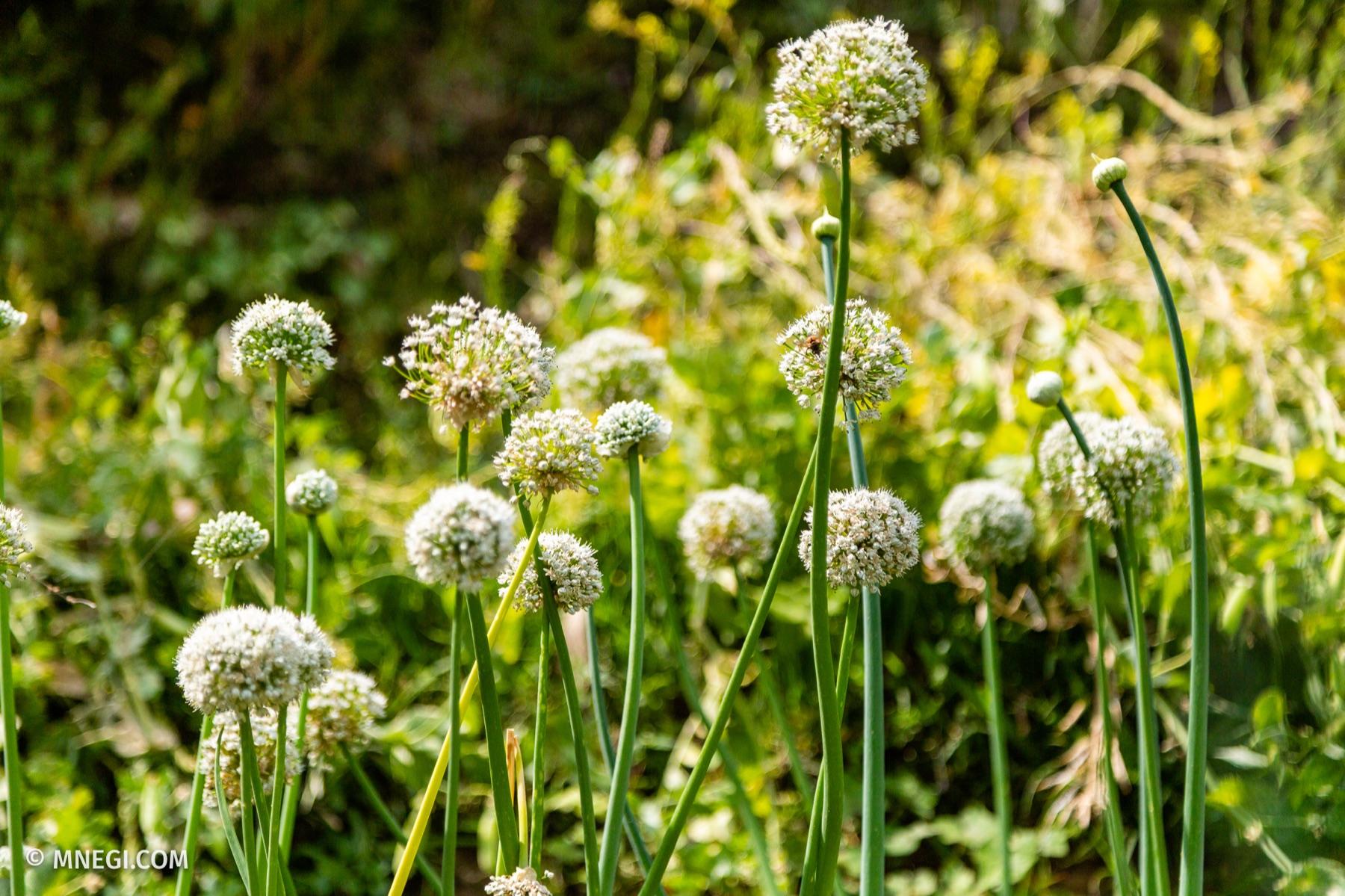
It is not only the bulk of a meal that comes from the garden — so does most of what gives it character. The garlic and onions that are the base of nearly every dish; the green chillies that go into the hara namak and the chutneys; the mint and coriander cut fresh for a raita or a garnish; the mustard pressed for the cooking oil itself. A kitchen here doesn't reach for a jar so much as it reaches out the back door. Even the heat and the herbs of a plate are local — which is part of why nothing here tastes quite the same anywhere else.
What the hills hand you for free
And then there is what we don't grow at all — what the hillside simply gives, for the cost of knowing where to look. After the rains, wild mushrooms push up in the oak leaf-litter, and those who can tell the safe ones from the rest go quietly gathering. In the warmer months there is wild asparagus, its tender shoots cut from the scrub. Foraging like this is older than any garden — it is the original farm-to-plate, and a good monsoon walk can come home with the evening's vegetable in a fold of cloth.
From the wild
Wild mushrooms
Foraged in the monsoon oak litter
Wild asparagus
Tender shoots, cut in the warm months
What we grow, and what we carry up
We don't grow everything, and we don't pretend to. The two the kitchen can never quite have enough of are its workhorses — potatoes and onions — and those, along with whatever is out of season, we carry up from the market at Panuwanaula, our nearest. A hill garden is generous but it is not infinite, and there is no shame in a sack of onions from the bazaar. The point was never self-sufficiency for its own sake; it was simply that the freshest, best thing on the plate should, wherever possible, be the thing that grew closest to it.
Stored for the lean months
Not everything is eaten fresh, and a hill kitchen has always known how to keep. The grains and pulses are dried and sacked after the autumn harvest; vegetables like the pinalu and the pumpkins store for months in a cool corner; lemons and chillies become pickles; and there is always something put by — sun-dried, salted, or hung — against the weeks when the frost has the garden and nothing green will grow. The garden feeds you in season; the storeroom feeds you between them. Together they mean a hill home need rarely go to the bazaar for the everyday.
A day's pickings
There is a small daily ritual to it that guests sometimes catch: someone going out before a meal with a basket or a fold of cloth, and coming back with whatever the garden is offering that day — a handful of spinach, a few green chillies, a radish or two, a bundle of mint, a marrow that has fattened overnight. The menu, in other words, is not really decided in the kitchen; it is decided in the garden, by what is ready. We cook what the morning gives us, and a meal here is, quite literally, the day's harvest on a plate.
A plate that grew ten steps away
To see what that means, take one ordinary plate. Madua ki roti — a dark, nutty, faintly sweet flatbread of finger millet, the grain grown in our own terraces. Beside it, pinalu ki sabji — the taro from the garden, cooked down soft and spiced. And to lift it all, bhang ki chutney — a sharp, nutty chutney ground from roasted hemp seed, the most Kumaoni thing on any table. Every element of that plate began within a few minutes' walk of the fire it was cooked on. It is not a fancy meal. It is an honest one, and it tastes of exactly where you are.
And it is eaten the way it is grown — without fuss, in good company, off a steel thali on the terrace or around the kitchen fire. We don't plate things prettily or course them out; everything comes at once, you eat with your hands, and you are pressed to a second helping whether you asked for one or not. The food is honest, and so is the eating of it.
What winter brings
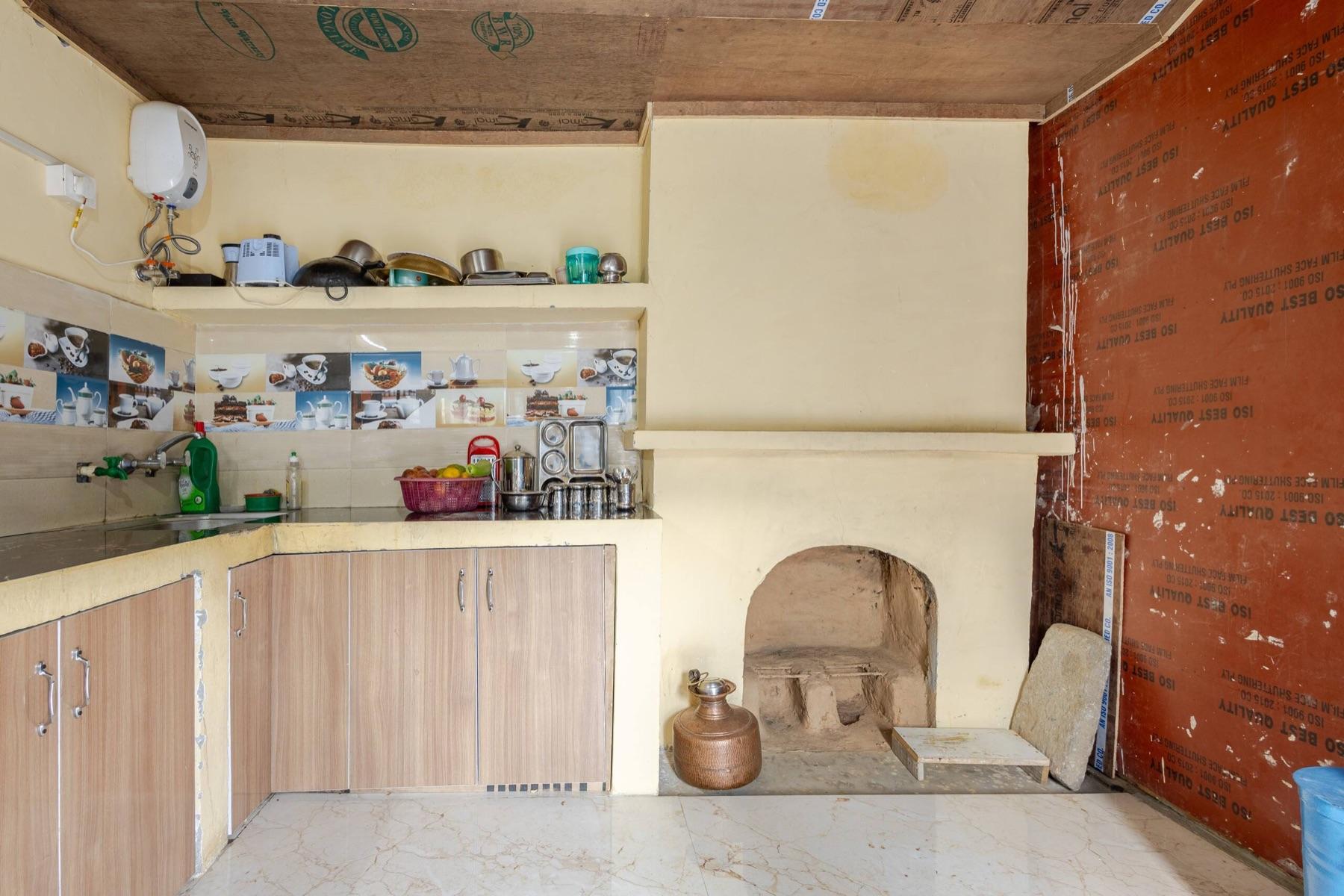
The plate keeps a calendar of its own, and turns with the year. Winter is the season of warming, grounding food — the season the hill diet was really built for. Out come the pinalu ki sabzi and the madua ki roti; the sarson ka saag, that deep green of mustard leaves cut from the frosty garden; and the gahat ki daal the hills swear by against the cold. And there is a winter treat I'd send anyone home craving: the big, rough hill lemons — galgal — cut and dressed with roasted bhang seed and jaggery, sour and sweet and nutty all at once, the kind of thing you didn't know you wanted until it's in front of you.
The warm months
As the year warms, the plate lightens. The heavy winter dals give way to quicker, cooler things: masoor dal, easy and everyday; jholi bhaat, a tangy, soupy buttermilk kadhi poured over rice, gentle on a warm afternoon; and rajma chawal, the kidney beans of the hills with rice — a dish that needs no introduction anywhere in north India, but tastes, here, of the very slope the beans grew on.
The green of the monsoon
Then the monsoon comes and redraws everything — the garden runs riot, the foraging is at its best, and the food turns to what the wet green season offers. The simplest pleasure of all belongs to these weeks: a cucumber, fresh from the vine, cut and dusted with hara namak — the green 'salt' of the hills, which is not salt at all but a coarse, fragrant pounding of salt with green chilli, coriander and mountain herbs. It sounds like nothing. On a humid monsoon afternoon, with the rain on the slate roof, it is perfect — half the pleasure of food, we've come to believe, is simply eating the right thing at the right time, in the right place.
Why it tastes of something
Guests often remark that the food here simply tastes of more — and there is no secret to it beyond distance, or the lack of it. A vegetable picked an hour before it is cooked has not spent days in a truck and a cold-store losing its sugars and its scent. The varieties we grow are old, local, unbred for shelf-life; the soil is what it is. None of it is special, exactly. It is only close, and fresh, and grown to be eaten rather than shipped — and that, it turns out, is most of what 'good food' ever meant.
The quiet wisdom of a hill plate
There is an old intelligence in all of this that we are only now, as a country, rediscovering. The hill plate was seasonal long before seasonal was a virtue — warming in winter and cooling in the heat because it had to be. The 'forgotten' grains and pulses that nutritionists now write about with such excitement — the madua, the jhangora, the gahat and bhatt — were never forgotten here; they were simply dinner. To eat at Kunja is, without anyone making a fuss of it, to eat the way these hills have always known to eat: close to the ground, with the season, and without waste.
So when we say farm-to-plate, we don't mean it as a boast. We mean it almost literally: the farm is right there, a few steps past the kitchen, and the plate is what it becomes. Sit on the terrace with a thali of it in front of you — the madua roti, the garden sabzi, the bhang chutney, the cucumber and hara namak — and you are, in the most ordinary and complete way, eating the place itself.
About the author
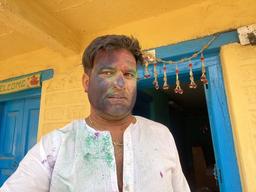
Manohar Negi
Owner & host
Manohar grew up in these hills and never really left. A photographer by craft and a host by heart, he turned the family home at Kunja into a place to share — and most of the frames you see across this site are his.
More about Manohar

Keep reading
Related pieces
 Food
FoodBhatt ke dubke, jholi bhaat, aloo ke gutke
A short, hungry tour of the Kumaoni table — dish by dish, the way we'd point it out to you with an empty plate in front of you.
Read it Food
FoodWe don't keep a guest hungry
On feeding people well as a form of love, never a service — the oldest thing this house knows how to do.
Read it FoodSoon
Madua, jhangora and the grains of these hills
The hardy hill grains the rest of India is only now rediscovering.
Read the idea
Comments
No comments yet — be the first to share a thought.